

Here’s something most articles about pinched nerves won’t tell you up front: roughly half the people who walk into the clinic convinced they have a pinched nerve don’t actually have one. They have something that feels like one. The pain pattern, the tingling, the way it lights up when they move a certain way, all of it can mimic the real thing. The treatment for what they actually have is often different from what they came in expecting.
This guide does two jobs. First, it helps you figure out what’s actually going on, because the right answer depends on whether you have real nerve root compression or one of several conditions that look similar. Second, it tells you what helps in either case, what doesn’t, and when symptoms warrant a closer look from a professional.
The Quick Answer
If you only have 30 seconds:
- True pinched nerve (radiculopathy) means the nerve root where it exits the spine is compressed or irritated. Symptoms follow a specific pattern down the arm or leg, and often include numbness, tingling, or weakness, not just pain.
- Most cases improve in 4 to 6 weeks with conservative care (chiropractic, physical therapy, gentle movement). Surgery is rarely needed and is usually reserved for severe or progressive cases that don’t respond to conservative treatment.
- What’s not a pinched nerve but feels like one: muscle referral pain, peripheral nerve entrapment (carpal tunnel, etc.), trigger points, and joint inflammation. Each needs a different approach.
- See a provider promptly if you have significant weakness, symptoms in both arms or both legs, loss of bowel or bladder control, or progressive worsening.
What “Pinched Nerve” Actually Means
The medical term for a true pinched nerve at the spine is radiculopathy. Per Cleveland Clinic, radiculopathy occurs when the nerve root (the point where a nerve exits the spinal cord) gets compressed or irritated. The compression typically comes from a herniated disc, bone spur, or narrowing of the space where the nerve travels (spinal stenosis).
Three things make radiculopathy distinctive:
First, the pain or symptoms radiate. They don’t stay in the back or neck. They travel down a specific path into the arm (if cervical) or leg (if lumbar) that follows the route of the affected nerve. This is called a dermatomal pattern, and it’s predictable. The C6 nerve root, for example, sends symptoms down the outer arm into the thumb and index finger. The L5 nerve root sends them from the low back into the outer leg and top of the foot.
Second, sensory changes accompany the pain. Numbness, tingling, “pins and needles,” burning, or that strange “weird” feeling people struggle to describe. Pain alone, without sensory changes, is less likely to be true nerve root compression.
Third, in more significant cases, there’s measurable weakness in the muscles controlled by the affected nerve. A C7 radiculopathy can produce triceps weakness. An L5 radiculopathy can make it hard to lift your foot at the ankle. Weakness is a sign the compression is meaningful enough to be affecting motor function, not just sensory signaling.
What It Might Be Instead
The reason “pinched nerve” gets misused so widely is that several other conditions produce similar symptoms. Telling them apart matters because the treatments are different.
Muscle referral pain
Muscles can refer pain in patterns that mimic nerve symptoms. A trigger point in the scalenes (small neck muscles) can send pain down the arm. A trigger point in the gluteus minimus can send pain down the leg in a pattern that looks like sciatica. The mechanism is different (muscular, not neurological) and the treatment is different (soft tissue work, not nerve mobilization). Confusing the two is one of the most common diagnostic missteps.
Peripheral nerve entrapment
Nerves can be compressed at places other than the spine. Carpal tunnel syndrome compresses the median nerve at the wrist. Cubital tunnel syndrome compresses the ulnar nerve at the elbow. Tarsal tunnel syndrome compresses the tibial nerve at the ankle. These all produce numbness and tingling that can look like radiculopathy, but the compression is at the peripheral nerve, not the nerve root. Johns Hopkins notes this overlap is one of the harder diagnostic challenges in this space.
Thoracic outlet syndrome
Compression of the nerves or blood vessels as they pass through the space between the collarbone and first rib. Can produce arm pain, tingling, weakness, and even color changes in the hand. Often misdiagnosed as cervical radiculopathy because the symptoms overlap significantly.
Joint and facet irritation
The small joints between vertebrae (facet joints) can become inflamed and refer pain in patterns that overlap with nerve compression. Facet pain tends to be more localized than radiculopathy and doesn’t usually produce true numbness or weakness, but the overlap is real.
Plain old muscle strain
Sometimes the answer is the simple one. A muscle strain that produces enough inflammation to irritate nearby nerves can feel exactly like a pinched nerve for the first few days. It usually resolves with time and gentle movement, no neurological intervention needed.
Symptoms by Location
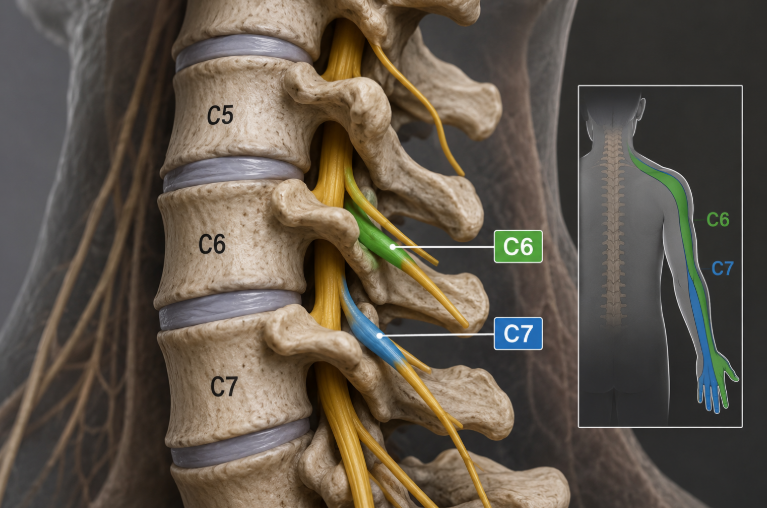
If you think it’s in your neck (cervical radiculopathy)
The C6 and C7 nerve roots account for about 80% of cervical radiculopathies. Common patterns by level:
- C5: Pain in the neck and shoulder, weakness in the deltoid (lifting arm to the side).
- C6: Pain or tingling down the outer arm to the thumb and index finger, possible biceps weakness.
- C7: Pain or tingling down the back of the arm to the middle finger, possible triceps weakness.
- C8: Pain or tingling down the inner arm to the ring and pinky fingers, possible grip weakness.
Cervical symptoms often get worse with neck extension (looking up), turning the head toward the affected side, or carrying heavy loads with the arm on that side. They sometimes improve with the arm held above the head (called the “shoulder abduction relief sign”), which is one of the more reliable indicators of true cervical radiculopathy.
If you think it’s in your back (lumbar radiculopathy)
Lumbar radiculopathy is the most common form. When it follows the path of the sciatic nerve down the back of the leg, it gets called sciatica. The L5 and S1 nerve roots are most commonly affected.
- L4: Pain into the front of the thigh and shin, possible weakness in lifting the foot (“foot drop”-like symptoms).
- L5: Pain down the outer leg and into the top of the foot and big toe, possible weakness in lifting the foot or big toe.
- S1: Pain down the back of the leg into the heel and outer foot, possible weakness in pushing off (calf raise).
Lumbar symptoms often get worse with sitting, bending forward, coughing, sneezing, or straining. They sometimes improve with walking or standing. A classic test is the straight leg raise: lying on your back, lifting the affected leg straight up reproduces or worsens the leg symptoms in true lumbar radiculopathy.
How to Tell If It’s Actually Nerve Root Compression
Self-diagnosis has limits, but a few honest indicators help narrow it down.
Signs that point toward real radiculopathy:
- Pain follows a clear path down the arm or leg, not just localized to the neck or back
- Numbness or tingling in specific areas (a finger, a patch of skin on the leg)
- Symptoms get worse with specific movements (neck extension, sitting, coughing, sneezing)
- Pain that follows a dermatomal pattern (a specific stripe down the limb)
- Reflexes that feel sluggish or absent on one side (worth having checked)
- Weakness in a specific muscle group
Signs that point away from true radiculopathy and toward something else:
- Pain that stays mostly in the neck or back without clear radiation
- Symptoms that move around or change locations day to day
- Numbness that doesn’t follow a specific dermatomal pattern
- Symptoms that don’t change with neck or spine position
- Pain that improves immediately with massage or pressure on a trigger point
None of these are definitive on their own. A real evaluation combines multiple tests, your symptom history, and sometimes imaging. The point of self-screening isn’t to diagnose yourself. It’s to know whether the picture is consistent enough with radiculopathy to warrant a proper evaluation, and how urgently.
What Actually Helps
Whether the issue turns out to be true radiculopathy or one of the conditions that mimics it, the early conservative approach is broadly similar. The key tools:
Gentle, position-specific movement
Bed rest is the wrong answer. Multiple studies have shown that prolonged rest delays recovery. What helps is finding positions and movements that don’t aggravate the symptoms, then gradually expanding the range as healing allows. For lumbar radiculopathy, this often looks like walking, gentle back extensions, and avoiding prolonged sitting in the early days. For cervical, it’s gentle range of motion within tolerance and avoiding postures that compress the affected nerve.
Manual therapy
Chiropractic adjustments, joint mobilization, and soft tissue work can address the joint and muscular components that often accompany or complicate radiculopathy. For conditions that mimic radiculopathy (muscle referral, trigger points), soft tissue work is often the primary intervention.
Nerve mobilization techniques
Nerves don’t just receive signals. They glide through the tissues around them as you move. When a nerve is irritated, those gliding mechanics get disrupted. Specific exercises (sometimes called nerve flossing) help restore normal nerve mobility. Used appropriately, they can significantly speed recovery. Done too aggressively, they can flare symptoms. This is where having a provider guiding the dose matters.
Progressive strengthening
Once acute symptoms settle, targeted strengthening of the muscles supporting the spine reduces the risk of recurrence. This is the part most patients skip once they’re feeling better, which is exactly why so many people end up dealing with pinched nerve symptoms again six months later.
Postural and ergonomic changes
If your symptoms came on from sustained posture (long hours at a laptop, driving, repetitive overhead work), changing what your body is being asked to do all day is part of the fix. No amount of treatment overcomes a daily setup that keeps re-aggravating the issue.
Medication, used appropriately
Anti-inflammatory medications (NSAIDs) can take the edge off in the acute phase, though recent thinking is more cautious about long-term use, since inflammation is part of the healing process. Nerve-specific medications (gabapentin, pregabalin) are sometimes prescribed for stubborn cases. These decisions belong with your medical provider, not your chiropractor.
Realistic Recovery Timeline
Patient honesty matters here, because expectations drive how well people stick with their plan.
Most cases of cervical or lumbar radiculopathy improve significantly within 4 to 6 weeks of consistent conservative care. Per the NIH StatPearls reference, a significant portion of patients improve over time with non-surgical management. Complete resolution often takes 2 to 3 months. Some research notes that 83% of patients take 2 to 3 years for full recovery in more severe cases, though the worst of the symptoms typically resolve well before then.
What this means in practice: the sharp, acute symptoms usually settle within a few weeks. The lingering numbness, tingling, or mild residual symptoms can take meaningfully longer to fully resolve. That doesn’t mean you’re not healing. It means nerve tissue heals slowly. Patience and consistency matter more than chasing a faster timeline.
If you’re not seeing meaningful improvement within 4 to 6 weeks of consistent care, that’s a reasonable point to reassess, possibly with imaging, and consider whether the plan needs to change.
When Imaging or Urgent Evaluation Is Warranted
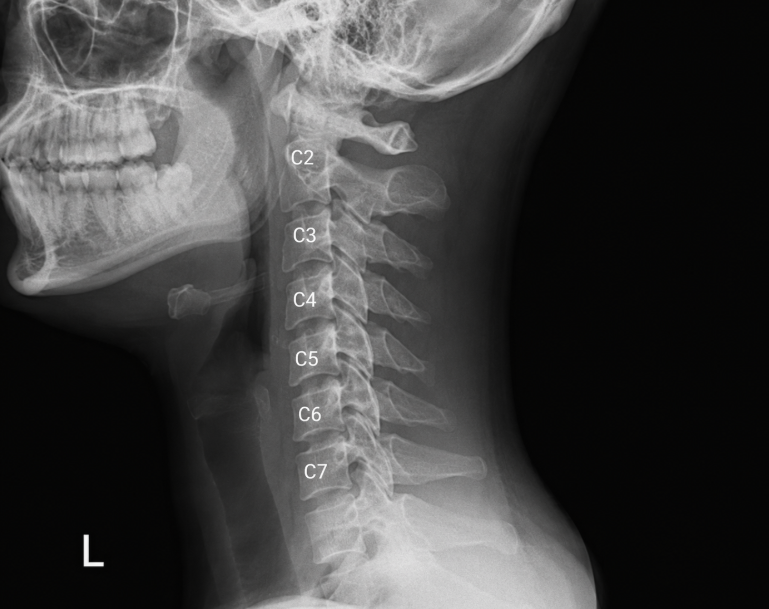
Most pinched nerve cases don’t need imaging upfront. The clinical picture is usually clear enough to start conservative treatment, and most cases resolve before imaging would change the plan. There are situations where imaging or urgent evaluation is necessary:
- Significant or progressive weakness (can’t lift your foot, can’t grip with normal strength, can’t push off when walking)
- Symptoms in both arms or both legs (can suggest central rather than peripheral compression)
- Loss of bowel or bladder control (emergency: this can indicate cauda equina syndrome and needs immediate evaluation)
- Saddle anesthesia (numbness in the inner thighs, buttocks, or perineum, also emergency)
- Symptoms following significant trauma (fall, car accident, sports collision)
- Symptoms that wake you up at night or progressively worsen instead of stabilizing
- History of cancer, recent infection, or fever with new back or neck symptoms
- Failed conservative treatment after 4 to 6 weeks of consistent effort
MRI is the gold standard imaging for both cervical and lumbar radiculopathy when imaging is indicated. X-rays show bone but not nerves or discs, so they’re less useful for this specific question, though they can identify some contributing factors like advanced arthritis or spinal stenosis.
If You Want a Real Answer About What’s Going On
The hardest part about pinched nerve symptoms is the uncertainty. You don’t know if it’s serious or not. You don’t know if it’ll resolve on its own. You don’t know if the exercises you found on YouTube are helping or making it worse. A proper evaluation answers those questions and gives you a clear plan.
If you’re in the Cedar Park area and dealing with symptoms that fit the picture above (neck or back pain that travels into an arm or leg, numbness, tingling, or weakness), Dr. Alex Klein at Cedar Park Chiropractic Relief takes a careful diagnostic approach to figuring out what’s actually going on before recommending treatment. The first visit includes a thorough history, a focused neurological and movement exam, and an honest assessment of whether conservative care is right for your situation, or whether you need imaging or referral. Call (512) 501-6941 or book online.
Frequently Asked Questions
How long does a pinched nerve last?
Most cases of true radiculopathy improve significantly within 4 to 6 weeks of conservative care, with full resolution often taking 2 to 3 months. Mild cases can resolve in weeks. Severe cases can take longer. Symptoms that haven’t improved at all within 4 to 6 weeks deserve a closer look.
Can a pinched nerve heal on its own?
Yes, many cases of radiculopathy resolve over time without intensive treatment. Avoiding aggravating positions, staying gently active, and giving the nerve time to settle often does the work. That said, consistent conservative care typically produces faster, more complete recovery and reduces the risk of the pattern becoming chronic.
Can a chiropractor help with a pinched nerve?
Often yes, when the pinched nerve is in the cervical or lumbar spine and the issue is amenable to conservative care. Chiropractic care typically combines adjustments, soft tissue work, nerve mobilization, and rehab exercises. Severe cases with significant weakness or red flags need medical evaluation first.
Should I see a chiropractor or a neurologist for a pinched nerve?
Depends on the severity. For mild to moderate cases without red flags, starting with a chiropractor or physical therapist is reasonable and often resolves the issue. For severe cases, significant weakness, symptoms in both limbs, or failure of conservative care, a neurologist or spine specialist is the right next step. A good chiropractor will tell you when you’ve crossed that threshold.
Is it safe to exercise with a pinched nerve?
Gentle, position-specific movement is part of the recovery, not against it. Bed rest is counterproductive. What you want to avoid is exercise that aggravates the symptoms or puts the affected nerve under more compression. Working with a provider helps you figure out what’s safe to do at each stage of recovery.
Can stress cause a pinched nerve?
Stress doesn’t directly compress nerves, but it contributes by increasing muscle tension, worsening posture, disrupting sleep, and amplifying pain perception. Many patients notice their pinched nerve symptoms flare during high-stress periods. Managing stress is part of managing the condition, not a separate issue.
What’s the difference between a pinched nerve and sciatica?
Sciatica is a specific type of pinched nerve. It refers to lumbar radiculopathy that affects the sciatic nerve and produces symptoms down the back of the leg. All sciatica is a form of pinched nerve, but not all pinched nerves are sciatica. Cervical (neck) and other lumbar nerve compressions don’t get called sciatica.3dedcfz