
Most people learned the rule the same way: ice for acute injuries, heat for chronic pain. That advice has been the standard since 1978, when the RICE protocol (rest, ice, compression, elevation) was first published. Here is the part that almost nobody knows. The doctor who created RICE publicly walked back the ice recommendation in 2014. The research has moved on. Most chiropractic and sports medicine practitioners have updated their guidance. The general public, including most of the internet, has not.
This guide gives you the current, evidence-informed answer. When ice actually helps, when heat actually helps, when both are wrong, and what to do instead when neither one is doing much.
The Quick Answer
If you only have 30 seconds, here is the updated version of the rule:
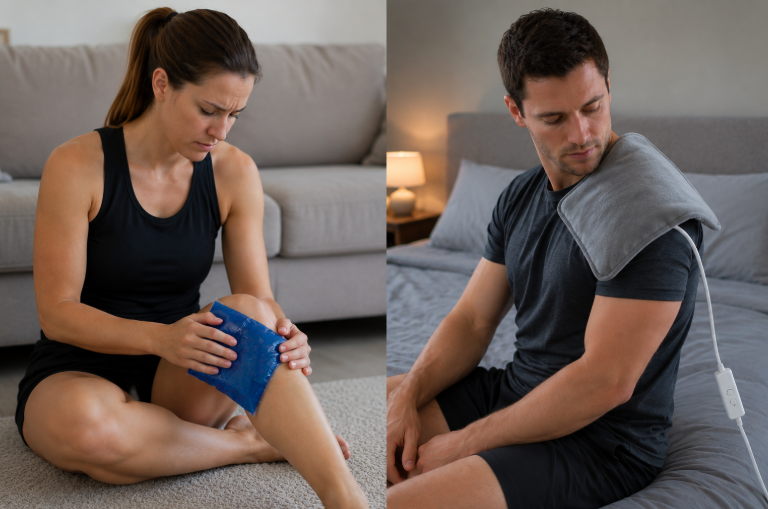
- Use ice for pain control in the first 24 to 48 hours after an acute injury, in short doses (10 to 15 minutes at a time). Use it to take the edge off, not to speed healing.
- Use heat for muscle tension, stiffness, chronic pain, and anything that has been bothering you for more than a few days. Use it before activity to loosen up.
- Use neither as a substitute for gentle movement, which is the single most important thing you can do for almost any musculoskeletal pain or injury.
If you want to know why the rule changed and how to actually apply it to your specific situation, the rest of this article will get you there.
Why RICE Got Retired
The RICE protocol was coined by Dr. Gabe Mirkin, a Harvard-trained sports medicine physician, in his bestselling 1978 Sportsmedicine Book. It became the gold standard taught in every coaching certification, every athletic training program, and every health class for almost four decades.
In March 2014, Mirkin published an article on his own site titled Why Ice Delays Recovery. In it, he reversed his own decades-old recommendation. The opening line: “Coaches have used my RICE guideline for decades, but now it appears that both Ice and complete Rest may delay healing, instead of helping.”
The reasoning is mechanical. When tissue is damaged, the body sends inflammatory cells (specifically macrophages) to the injured area. Those cells release a hormone called IGF-1 that signals tissue to begin repairing. Inflammation, in other words, is not the enemy of healing. It is the start of healing.
Ice causes blood vessels to constrict, which reduces blood flow to the injured area. That blocks the inflammatory cells from getting where they need to go. Ice does reduce swelling and dull pain, both of which are useful in their own right. What it does not do is speed healing, and prolonged or repeated icing can actually slow it down.
In 2019, a group of researchers led by Blaise Dubois proposed a replacement protocol called PEACE & LOVE. The protection-elevation-avoid anti-inflammatories-compression-education plus load-optimism-vascularization-exercise framework treats acute injuries differently. Ice is not part of it. Movement is.
When Ice Still Makes Sense
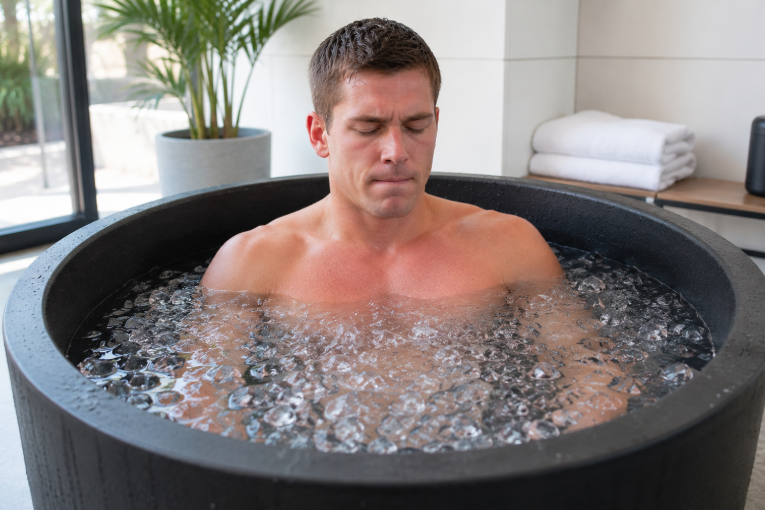
Ice is not banned. It is just no longer the hero of the story. Here is when it still has a real role:
Pain control in the first 24 to 48 hours
After an acute injury (sprained ankle, tweaked back, pulled muscle), ice can genuinely dull pain. That matters because pain itself prevents the gentle movement you actually need to start the healing process. If a short ice session lets you walk around the house instead of staying in bed, it is doing useful work.
Acute swelling that is interfering with movement
If swelling is severe enough that you cannot move the joint at all, a short ice session can take enough swelling down to let you start gentle range of motion. The goal here is to enable movement, not to eliminate swelling.
Headaches and migraines
Cold packs on the forehead, temples, or back of the neck remain a well-tolerated, low-risk option for headache pain. The mechanism is different than for tissue injury and the research supports it.
Acute flare-ups in chronic conditions
If a chronic issue (arthritis, an old injury, low back pain) suddenly flares with sharp pain, ice for short periods can take the edge off enough to function. Switch to heat once the acute flare settles.
How to actually use ice
Ten to fifteen minutes at a time. Never directly on skin (put a thin towel between the ice and the skin). Wait at least an hour before re-icing. Stop using it after the first 48 hours unless you have a specific reason to continue.
When Heat Is the Better Tool

Heat is the right answer more often than most people realize. It increases blood flow, relaxes muscle tension, and prepares tissue for movement. Use it for:
Muscle tightness and tension
Tight shoulders from a long day at a desk. Stiff lower back after sleeping wrong. Hamstrings that feel like steel cables. Heat is the move. A warm shower, a heating pad, or a hot bath all work. Twenty to thirty minutes is plenty.
Chronic pain
If something has been bothering you for more than a few days, the acute inflammatory phase is over. Heat helps by improving circulation and reducing the muscle guarding that often builds up around chronic pain.
Stiffness before exercise or stretching
Heat applied before activity can make tissue more pliable, which makes warm-up more productive and reduces injury risk. A warm shower before a workout, or a heating pad on a stiff area before you stretch it, both work well.
Arthritis pain
Most people with arthritis find heat more comfortable than ice. The improved circulation and reduced joint stiffness usually outweigh any inflammatory considerations. Listen to your own body here. Some people prefer ice for arthritis flares. Both are defensible.
How to actually use heat
Twenty to thirty minutes at a time. Warm, not hot. If you can’t comfortably keep your hand on it, it’s too hot. Heating pads, hot showers, warm baths, hot tubs, and microwaveable heat packs all work. Avoid sleeping with a heating pad on (burn risk).
When Neither Ice Nor Heat Is Doing Much
This is the part most articles skip. Sometimes the most useful answer is that you’ve been chasing the wrong solution. A few common signs that ice and heat are not solving your problem:
Pain that keeps coming back. If you ice or heat, feel better for a few hours, and then the pain returns, you are managing a symptom while the underlying cause continues. The ice or heat is not wrong. It is just incomplete.
Pain that has lasted more than two or three weeks. At this point, you are well outside the acute phase. Chronic musculoskeletal pain rarely resolves with passive treatment alone. Something needs to change about how the area is being used, loaded, or moved.
Pain that radiates, tingles, or includes numbness. These can be signs of nerve involvement that goes beyond what ice and heat will reach. Worth getting evaluated.
Pain that wakes you up at night. Mechanical pain typically gets better with rest. Pain that gets worse at night or wakes you up deserves a closer look.
What Actually Helps More Than Either One
Here is the part the research is clearest on. For almost any musculoskeletal pain or injury, the most important intervention is appropriate movement, not passive treatment with hot or cold packs.
That does not mean pushing through pain or running through an injury. It means gentle, progressive movement within tolerance. Range of motion exercises. Light walking. Pain-free loading of the area. The kind of movement that signals to the body that the injured tissue needs to keep doing its job.
Studies on ankle sprains, low back pain, neck pain, and most soft tissue injuries consistently show that early, gentle movement produces better outcomes than rest. Ice and heat are useful for managing symptoms so you can move. Movement is what actually heals.
Quick Answers for Common Situations
Pulled my back this morning
Ice for 10 to 15 minutes if it helps with pain, then gentle movement (walking, light range of motion). Avoid bed rest. Switch to heat after 48 hours.
Sprained ankle yesterday
Light compression, elevation, and gentle movement within pain tolerance. Ice in short doses for pain only. Start walking on it (without limping) as soon as you can without sharp pain.
Chronic low back pain that comes and goes
Heat is your friend for flare-ups. The bigger answer is movement and strengthening. Repeated ice/heat cycles without addressing the underlying mechanics is symptom management, not progress.
Sore after a hard workout
Generally skip the ice. Some recent research suggests ice baths and ice immediately post-workout may actually blunt the training adaptations you’re trying to build. Light movement the next day, warm shower, normal sleep. The soreness is part of how you get stronger.
Pinched nerve in the neck
Heat for the muscle tension that often accompanies it. Gentle neck range of motion within tolerance. Ice if it provides pain relief, but not as a primary strategy. See a provider if symptoms persist beyond a week or include arm numbness or weakness.
Tension headache
Heat on the neck and shoulders, ice on the forehead. Many people find this combination effective. Address the underlying neck tension once the headache settles.
Bumped my knee, swelling now
Short ice sessions for pain and to enable movement. Compression. Elevation when sitting. Start gentle range of motion as soon as you can tolerate it. If swelling is severe or you cannot bear weight, get evaluated.
When to Bring in a Professional
Most everyday aches and acute soft tissue injuries respond well to the framework above. There are situations where you should not be self-treating with ice and heat:
- Pain that has lasted more than three weeks
- Pain that includes radiating symptoms, tingling, numbness, or weakness
- Pain that wakes you up at night or progressively worsens
- Loss of function (can’t bear weight, can’t lift your arm, can’t turn your head)
- Pain following a significant trauma (car accident, fall, sports collision)
- Recurring injuries to the same area
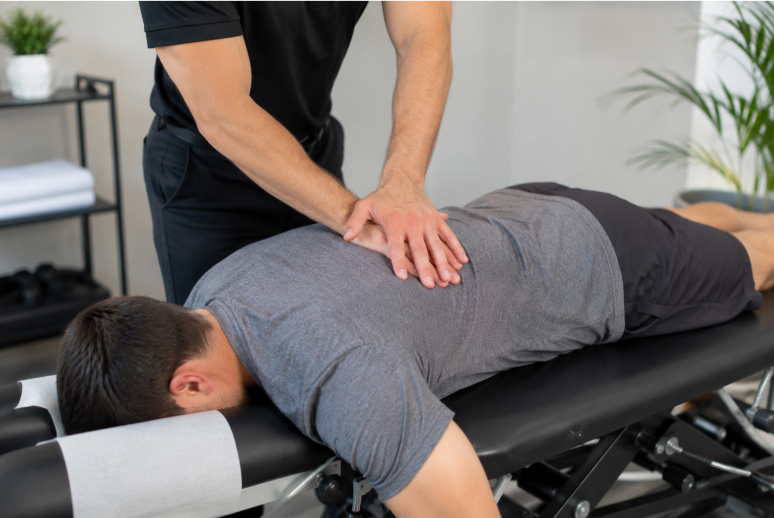
For musculoskeletal pain that has gone past the acute phase or keeps coming back, conservative care that combines hands-on treatment with progressive movement work tends to outperform passive modalities alone. If you are in the Cedar Park area and want a clear, honest assessment of what is actually going on, Dr. Alex Klein at Cedar Park Chiropractic Relief takes a conservative-first approach with an emphasis on movement and function. Book online or call (512) 501-6941.
Frequently Asked Questions
Should I use ice or heat for back pain?
Depends on the timing. If you just hurt your back in the last day or two, ice for short periods can help with pain. If your back pain has been going on for more than a few days or is chronic, heat is generally the better choice. Movement matters more than either one.
Is the RICE method outdated?
The R (rest) and I (ice) parts have been significantly revised. The newer thinking, formalized in the 2019 PEACE & LOVE protocol, treats prolonged rest and routine icing as potentially counterproductive. Compression and elevation still have their place, alongside early movement and progressive loading.
How long should I ice an injury?
Ten to fifteen minutes at a time, with at least an hour between sessions. Stop after the first 48 hours unless you have a specific reason to continue. The goal is pain management, not extended icing.
Can I use ice and heat together?
Yes, in a process sometimes called contrast therapy. Alternating between the two can be useful for some chronic conditions and stubborn muscle tension. The evidence on contrast therapy is mixed but the practice is low-risk. If it feels good, it is fine to use.
What about ice baths for recovery?
Recent research suggests ice baths immediately after strength or hypertrophy training may blunt the training adaptations you are trying to build. Some endurance athletes still use them for perceived recovery benefits. For most recreational athletes, the benefits are likely overstated and the protocol is not necessary.
Should I ice after a chiropractic adjustment?
Generally no. Mild post-adjustment soreness is part of how the body responds to the work, and routine icing afterward is more habit than evidence-based practice. If you experience unusual or sharp pain after an adjustment, talk to your provider rather than reaching for ice.