
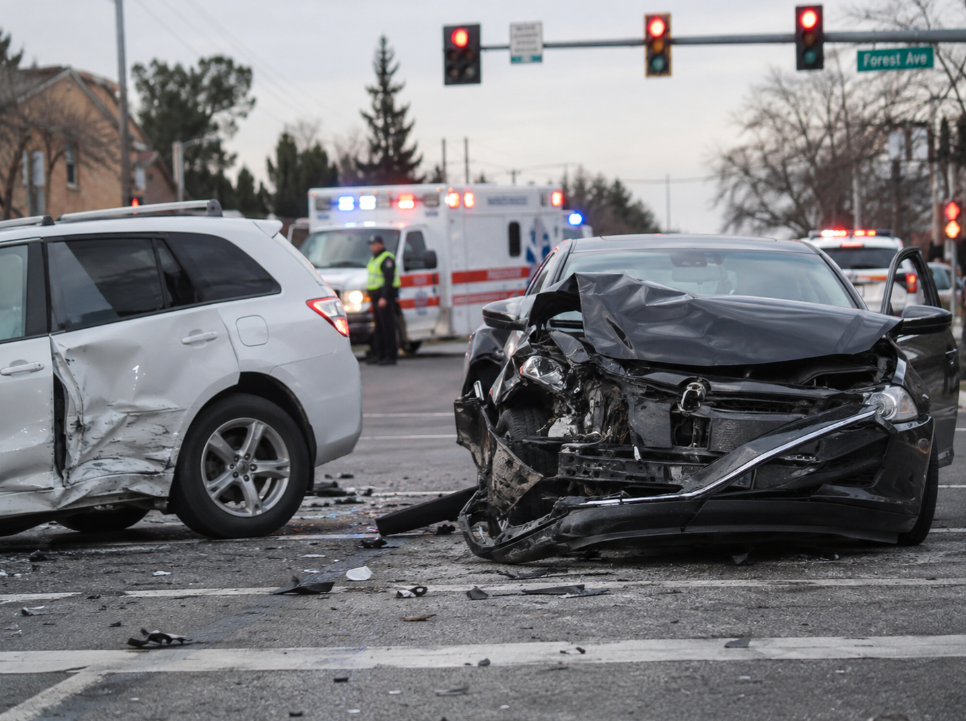
The decision you’re standing in feels bigger than it usually is. You’ve just been in a car accident. Adrenaline is masking most of what your body is feeling. You’re trying to figure out whether you’re actually hurt, whether you need to go to the emergency room right now, whether urgent care is enough, or whether you can go home and see how you feel in the morning. And on top of all of it, you’re getting advice from everyone (the officer at the scene, your insurance company, your family, the internet) that ranges from useful to conflicting to occasionally dangerous.
This guide is the tight, honest version. What to do in the first hour. What to do in the first 24 hours. What to watch for in the 72-hour window when delayed injuries typically surface. And when a chiropractor belongs in the picture at all (spoiler: not first). We keep it focused on the triage decisions because those are what matter most in the first three days. For the broader recovery arc that comes after this window, our car accident recovery guide covers what comes next.
The First Hour: Call 911 or Not?
The very first triage decision happens before you leave the scene. Some situations require an ambulance and emergency room evaluation immediately, regardless of how you feel in the moment. Adrenaline routinely hides the severity of significant injuries in the first hour after a collision. “I feel fine” is not reliable data at this stage.
Call 911 from the scene if any of the following apply:
- Loss of consciousness at any point, even briefly
- Confusion, disorientation, or memory gaps about the accident itself
- Severe headache or headache that’s rapidly worsening
- Neck pain with numbness, tingling, or weakness in the arms or hands
- Back pain with numbness or weakness in the legs, or any change in bowel or bladder control
- Chest pain, shortness of breath, or irregular heartbeat
- Vomiting or persistent nausea
- Visible deformity of a limb, or inability to move a body part normally
- Significant bleeding or an open wound
- High-speed collision, rollover, or significant vehicle damage regardless of how you feel
None of the above? You may still want emergency evaluation depending on what you’re feeling, but you probably don’t need an ambulance. Get to a safe location, call your insurance to start a claim, and take stock of how your body actually feels once the initial shock settles.
The First 24 Hours: Choose Your Provider Carefully
If you didn’t go to the ER from the scene, the first 24 hours is when you need to decide whether to seek evaluation and where. Here’s the honest framework.
Go to an emergency room if:
- You develop any of the red flags listed in the first hour section, even if they weren’t present initially
- You’re experiencing significant or increasing pain anywhere, especially neck, back, chest, or abdomen
- You have significant swelling, bruising that’s spreading, or asymmetric pupils
- You’re unable to bear weight on a leg, or can’t move an arm normally
- You’re on blood thinners or have known bleeding disorders
- You have prior neck or back conditions and the accident significantly worsened them
- You’re pregnant
The ER handles imaging (CT scans for suspected head injury, x-rays for suspected fractures), immediate medical management, and can rule out the serious problems that can hide behind adrenaline. Even if it turns out to be nothing, the documentation from an ER visit becomes important for both your medical record and any insurance or legal follow-up.
Urgent care can work if:
- The accident was low-speed with minimal vehicle damage
- You have no head trauma, loss of consciousness, or neurological symptoms
- Your primary complaint is mild to moderate musculoskeletal pain without red flags
- You need documentation of injury for insurance but don’t need emergency-level evaluation
Urgent care can evaluate, order imaging if warranted, prescribe short-term medications for pain or muscle spasm, and refer you appropriately. What they typically cannot do is the deeper injury workup that some post-accident patients need, so if things escalate, they may end up sending you to the ER anyway.
Do NOT skip medical evaluation entirely if:
- Any of the red flags apply
- You have significant pain in any area
- You have any concerning symptoms at all
- You have insurance considerations that require documentation of injury
This is where a lot of people make expensive mistakes. “I felt fine so I didn’t get checked out” becomes a real problem three weeks later when symptoms surface, because you now have no documented connection between the accident and the injuries.
Where a chiropractor does NOT belong in the first 24 hours:
As your first provider after an accident. This is one of the most important points in this article. A chiropractor is not equipped to rule out fractures, internal bleeding, concussion, or the other serious injuries that can occur in a collision. Medical evaluation comes first. Chiropractic care fits into the recovery picture after medical clearance, not before it.
An honest chiropractor will tell you exactly this. If you walk into a chiropractic office immediately after an accident and the provider starts adjusting you without first insisting on medical evaluation, that’s a red flag about that provider’s clinical judgment, not a sign they’re eager to help you.
Days 2 and 3: The Delayed Symptom Window
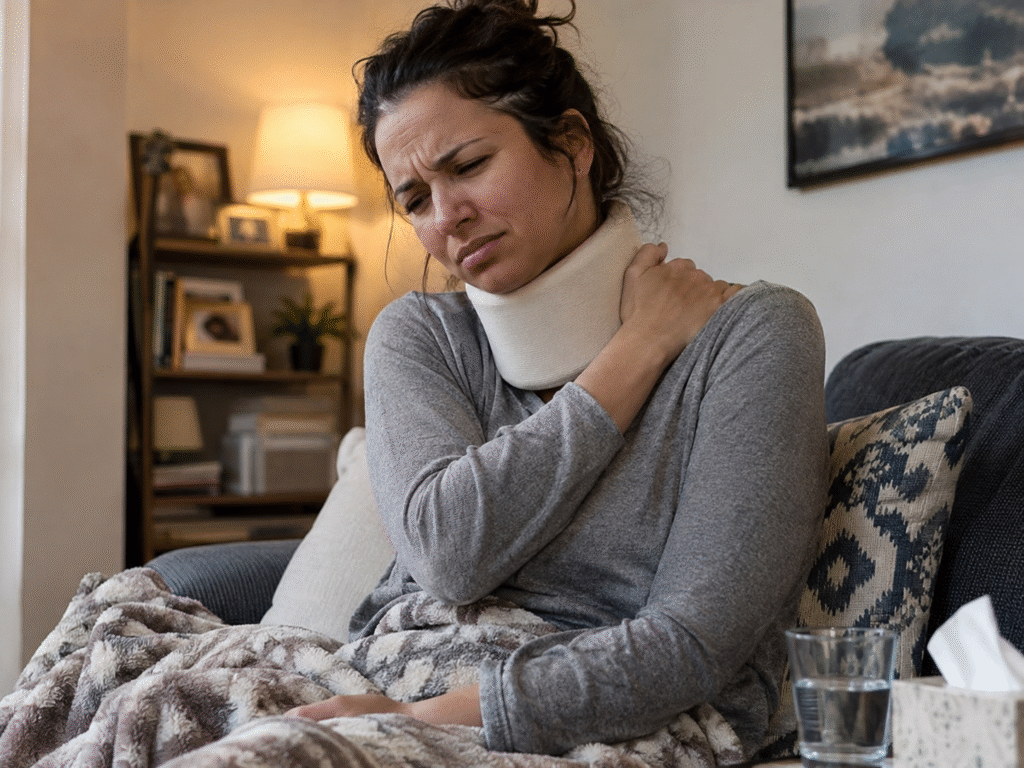
The 72-hour window after a car accident is when delayed injuries typically surface. Adrenaline and the body’s acute inflammatory response can mask symptoms for the first day, sometimes longer. Many people who felt fine at the scene wake up on day two or three with significant pain, stiffness, or other symptoms they didn’t have initially.
Common delayed symptoms to watch for:
Neck pain and stiffness
The classic delayed presentation. Whiplash injuries often produce minimal symptoms in the first 24 hours and become dramatically more painful on days two through five. The tissue damage happened at the moment of impact; the inflammatory response and muscle guarding that produce most of the pain build over the following days. If you develop new neck pain, stiffness, or reduced range of motion in the 72-hour window, get evaluated.
Headaches
Post-accident headaches can indicate several things: musculoskeletal pain referring from the neck, mild concussion or post-concussion syndrome, or (rarely but importantly) more serious brain injuries that were missed in the initial evaluation. A new headache that develops in the 72-hour window deserves medical evaluation, especially if it’s severe, worsening, or accompanied by any cognitive changes.
Low back pain
The lumbar spine takes significant force in most collisions, even in low-speed accidents. Low back pain that surfaces on day two or three is common and usually responds well to conservative care once serious causes have been ruled out.
Cognitive changes
Difficulty concentrating, brain fog, memory lapses, mood changes, or sleep disruption in the days after an accident can indicate mild traumatic brain injury (mTBI) that wasn’t obvious initially. These symptoms warrant medical evaluation. Concussion diagnosis is clinical and does not require loss of consciousness at the time of injury.
Numbness, tingling, or weakness
New neurological symptoms in the arms or legs during the 72-hour window can indicate nerve or spinal cord irritation that needs prompt evaluation. Don’t wait on these.
Abdominal pain
Seatbelt injuries and internal trauma sometimes present with delayed abdominal pain, bloating, or bruising across the seatbelt line. These need emergency evaluation because internal bleeding can be dangerous and hard to detect without imaging.
Chest wall pain
Airbags and seatbelts save lives and also cause chest wall injuries. Costochondritis, rib fractures, and chest wall bruising can all produce significant pain that shows up on day two or three. Sharp chest pain with breathing or coughing that develops in this window deserves medical evaluation to rule out fractures or lung injury.
Days 4 Through 7: When Chiropractic Care Fits In
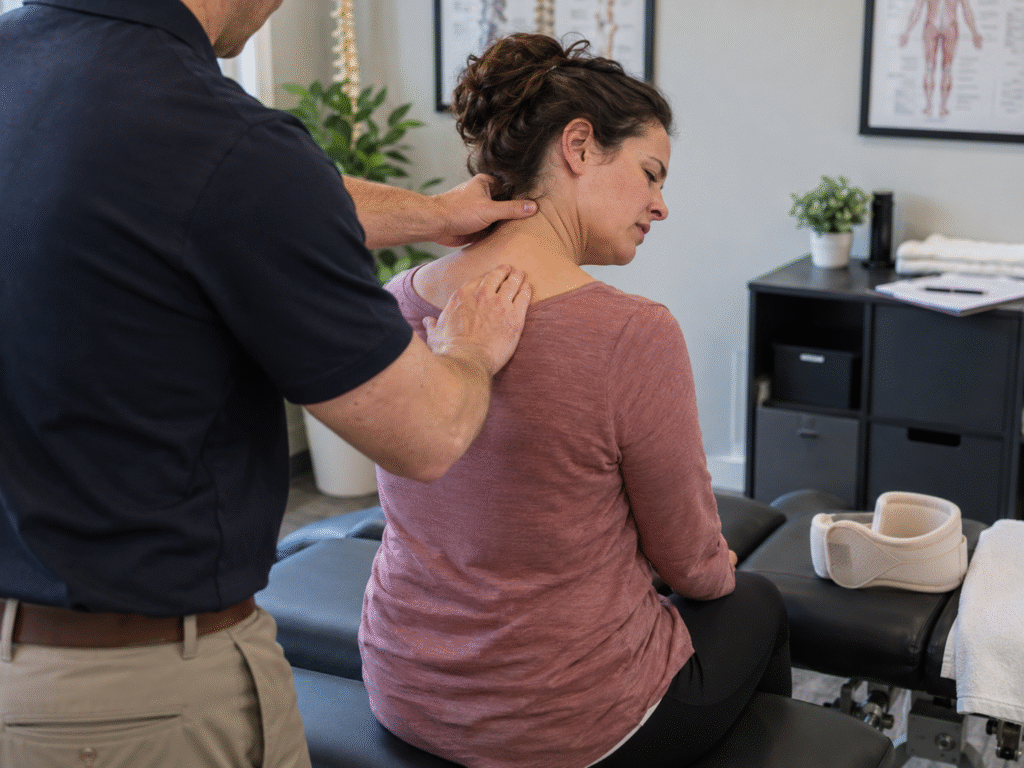
Once you’ve been medically evaluated, serious injuries have been ruled out, and you’re clearly dealing with musculoskeletal recovery, this is typically when adding a chiropractor to your care plan makes sense. Some patients start conservative care earlier if their medical provider has cleared them; some wait longer if there are complicating factors. The 4-to-7-day window is a reasonable general expectation.
What conservative care in this phase looks like:
Gentle manual therapy addressing the tissue restrictions and joint dysfunction from the impact. This is not aggressive high-velocity manipulation in the early days; the tissue is still inflamed and needs a lighter touch. Soft tissue work, mobilization, and specific range-of-motion exercises typically dominate the early treatment.
Movement guidance. What positions and activities to avoid. What movements to start doing to prevent stiffness from settling in. How to structure your day around the injury. This coaching is often as valuable as the hands-on treatment itself.
Documentation of injury and treatment. If your case involves insurance claims or potential legal follow-up, thorough documentation from the beginning matters. The provider you choose should be experienced with this kind of documentation and willing to communicate with your other treating providers.
Coordination with medical care. Good conservative care providers stay in their lane. If new symptoms develop or something doesn’t improve as expected, referral back to medical evaluation is appropriate. If you already have a primary care physician or specialist involved, everyone should be aware of what treatments you’re receiving.
When the ER Isn’t Optional Regardless of How You Feel
Even if you feel okay in the moment, some situations warrant emergency evaluation regardless of your assessment of your own condition. Adrenaline is a powerful anesthetic and lies to you for hours after significant trauma.
Go to the ER even if you feel fine if:
- The accident involved airbag deployment
- The collision was high-speed (highway speeds, side-impact, rollover)
- You lost consciousness at any point, even briefly
- You’re on blood thinners or have bleeding disorders
- You’re pregnant
- Another person in your vehicle was seriously injured or killed
- You have significant pre-existing spinal conditions
- You’re an older adult and the impact was more than minor
Better to spend a few hours in an ER and be told you’re fine than to skip the evaluation and discover a missed injury weeks later when treatment options are worse and insurance documentation is harder.
If You’re Past the 72-Hour Window and Ready to Talk Recovery
If you’ve been through the initial triage phase, gotten medical clearance, and are ready to think about the recovery arc that comes next, Cedar Park Chiropractic Relief works with post-accident patients across the full spectrum of injury severity. Dr. Alex Klein evaluates carefully, communicates with your other providers when appropriate, and won’t oversell what conservative care can do.
Our car accident recovery guide covers the broader picture: Texas PIP coverage, the typical multi-week recovery arc, and how conservative care fits into it. For questions about your specific situation or to schedule an evaluation, call (512) 501-6941 or book online.
Frequently Asked Questions
Should I see a chiropractor or a doctor first after a car accident?
A doctor first, essentially always. Medical evaluation rules out the serious injuries (concussion, internal bleeding, fractures) that a chiropractor is not equipped to assess. Chiropractic care fits into the recovery picture after medical clearance, typically starting a few days to a week after the accident once the acute phase has been managed and serious injuries have been ruled out.
How long after a car accident should I see a chiropractor?
The typical range is 4 to 14 days after the accident, following medical evaluation and clearance. Some patients start sooner if their medical provider clears them. Some wait longer if complications are being managed. The specific timing depends on your injuries, your medical provider’s recommendations, and how the acute phase is going.
Should I go to the ER even if I feel fine after a car accident?
Depends on the accident. For high-speed collisions, airbag deployment, rollovers, or accidents where anyone else was significantly injured, yes, get evaluated even if you feel fine. Adrenaline hides significant injuries for hours after trauma. For low-speed fender-benders with no red flags, watchful waiting for 24 to 48 hours followed by urgent care or your primary care provider if symptoms develop is reasonable.
What if I feel fine at the scene but sore the next day?
This is the most common pattern. Get evaluated. The delayed onset of pain in the 24 to 72 hour window is well-documented and represents real injury that was masked by adrenaline. Waiting longer than a few days to seek evaluation makes both treatment and insurance documentation harder.
Can I go to a chiropractor right after a car accident?
You can, but you shouldn’t as your first provider. A chiropractor is not equipped to evaluate the serious injuries that need to be ruled out immediately after an accident. A chiropractor who’s willing to be your only provider before medical evaluation is showing poor clinical judgment. Get medically evaluated first, then bring in conservative care once serious injuries have been ruled out.
What if my accident seems minor?
Even low-speed collisions can produce meaningful injury, especially to the neck and low back. If you have any symptoms in the 72-hour window (pain, stiffness, headache, cognitive changes), get evaluated. Insurance documentation of injury also becomes important if symptoms develop later, and that’s much easier to establish early than after a delay.