
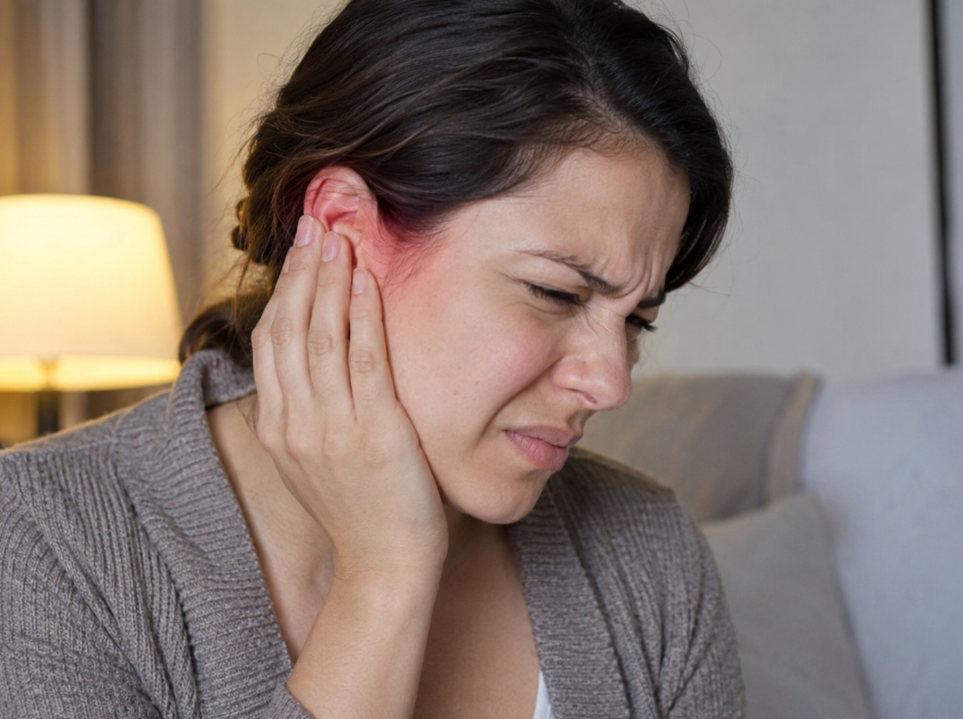
You’ve been dealing with it for weeks or months. That ear fullness that won’t go away. The pressure that comes and goes. The ringing that started one day and hasn’t quite stopped. Maybe a muffled feeling that isn’t quite hearing loss. You’ve been to an ENT, maybe more than one. They looked in your ears, did the tests, and told you everything looks normal. No infection. No fluid. No structural problem. Nothing to treat.
And yet the symptoms are still there.
This article is for that specific situation. When ear symptoms persist despite a clear ENT workup, the source is often not the ear at all. It’s the neck. Specifically, the upper cervical spine, where a real anatomical convergence between neck and ear signaling can produce symptoms that feel entirely like an ear problem but actually originate somewhere else.
This is not a claim that chiropractic care fixes ear problems in general. It doesn’t. Ear infections need medical care. Meniere’s disease needs an ENT. Actual hearing loss is not a chiropractic issue. What this piece covers is the specific pattern where a real neck-based mechanism can produce symptoms patients experience as ear symptoms, and where conservative care sometimes does help. If that’s you, keep reading. If your symptoms clearly point to an actual ear problem, this isn’t the article for you.
The Anatomy Nobody Told You About
The connection between the neck and the ear is not vague or theoretical. It’s an anatomical reality that most patients (and honestly, most healthcare providers who aren’t specialists in this area) have never had explained to them. Two specific facts drive the entire mechanism.
The upper cervical nerves innervate parts of the ear
The nerves that exit the top of your spine, specifically the C2 and C3 nerve roots, send branches that supply sensation to significant portions of the ear region. The great auricular nerve and lesser occipital nerve carry these signals from your neck up to the auricle (the visible part of your ear), the area behind the ear, and the skin along the mandible near the ear. When these nerves are irritated, compressed, or transmitting altered signals from dysfunction in the upper cervical spine, the brain can perceive those signals as coming from the ear.
The trigeminocervical nucleus creates convergence
This is where it gets genuinely interesting. Deep in the upper cervical spinal cord, there’s a region called the trigeminocervical nucleus. It’s where sensory signals from the upper cervical nerves converge with signals from the trigeminal nerve (the major nerve that carries sensation from most of your face and head, including the ear itself via the auriculotemporal branch).
The convergence matters because the brain doesn’t always know which nerve a signal originally came from. Persistent input from the upper cervical spine can be interpreted by the brain as coming from anywhere the trigeminal nerve supplies, including the ear, the temple, the jaw, or behind the eye. This is the same anatomical basis that explains cervicogenic headache. It also explains why the neck can produce symptoms that feel like they’re coming from the ear even when the ear itself is completely normal.
How often this actually happens
More often than most patients realize. In one clinical study of chronic ear pain patients, cervical spine causes accounted for about 37 percent of cases and TMJ causes accounted for another 37 percent. Together, non-otologic sources made up nearly three-quarters of the chronic ear pain workup. The ENT workup is important because it rules out the ear itself, but a normal ENT exam doesn’t mean the symptoms aren’t real. It often means the source is elsewhere.
What Cervicogenic Ear Symptoms Actually Feel Like

The presentation patterns overlap with true ear conditions enough to fool most patients, but there are distinct features worth knowing about.
Ear fullness or pressure
The sensation of the ear being blocked, plugged, or pressurized without any actual middle ear issue. Patients often try to “pop” their ears repeatedly without relief because the pressure isn’t actually in the ear. It’s a referred sensation from the upper cervical spine. This is one of the most common cervicogenic ear presentations and one of the most likely to be dismissed after a normal ENT exam.
Non-otologic ear pain
Actual pain in the ear region when the ear itself is anatomically normal. Can range from mild discomfort to sharp episodic pain. Often described as being “in” the ear even though the source is the upper cervical region. May be worse with certain neck positions or after prolonged desk work.
Cervicogenic somatosensory tinnitus
A specific subtype of tinnitus where the ringing or buzzing is driven by input from the cervical spine or jaw. Not all tinnitus is cervicogenic, and most tinnitus has other causes. But a subset of patients have tinnitus that changes with neck movement or head position, which is a signal that cervical input is contributing. This form of tinnitus is more likely to respond to conservative care than tinnitus from other causes.
Muffled hearing sensation without actual hearing loss
Sounds feeling distant or dampened without any measurable hearing deficit. Hearing tests come back normal, but the subjective sense of muffled hearing persists. This is another referred sensation pattern that can accompany cervicogenic ear symptoms.
How to Tell If Yours Might Be Cervicogenic
None of these are diagnostic on their own, but together they build a picture. Signs that point toward a cervicogenic source:
- Your ENT exam was normal but symptoms persist
- You also have neck pain, stiffness, or headaches
- Symptoms change with neck position or movement
- Symptoms are worse after prolonged desk work, driving, or looking down
- You have a history of neck injury, whiplash, or chronic posture issues
- You have TMJ pain, jaw tension, or dental issues alongside the ear symptoms
- Symptoms are one-sided and correlate with the side of your worse neck complaints
- You notice ear symptoms getting worse during high-stress periods when you carry more tension in your neck and shoulders
Signs that suggest the source is not cervical:
- Measurable hearing loss on formal testing
- Symptoms with clear altitude sensitivity (worse on planes, elevators)
- Visible eardrum abnormalities or actual fluid on ENT exam
- Vertigo with specific spinning that lasts more than a few seconds
- Ear discharge or bleeding
- Sudden hearing loss or sudden tinnitus onset without any neck factor
- Symptoms that don’t change at all with neck movement or position
What Definitely Needs an ENT, Not a Chiropractor
Honest scope requires being clear about what conservative care cannot address. The following ear symptoms need medical evaluation and are not chiropractic territory:
Ear infections
Acute or chronic otitis media, otitis externa, or any active infection. These need medical management, usually including antibiotics for bacterial cases. Chiropractic care is not a treatment for ear infections despite what some marketing suggests, particularly for children. Untreated ear infections in kids can lead to hearing complications and other issues that appropriate medical care prevents.
Fluid in the middle ear
Serous otitis media (fluid behind the eardrum without infection) can affect hearing and requires medical management. Chiropractic “ear adjustments” claimed to drain middle ear fluid are not supported by evidence. If an ENT confirms fluid, the appropriate care path is medical, sometimes including monitoring, sometimes tubes for persistent cases.
Actual hearing loss
Any measurable hearing deficit needs audiological evaluation and appropriate medical management. Sudden hearing loss is a medical urgency and needs prompt evaluation, not conservative care.
Meniere’s disease
The combination of episodic vertigo, hearing loss, tinnitus, and ear fullness that defines Meniere’s requires ENT management. Chiropractic care does not treat Meniere’s disease.
Sudden or progressive tinnitus
New sudden-onset tinnitus, especially one-sided, or tinnitus that’s progressively worsening warrants medical evaluation to rule out acoustic neuroma and other conditions. Not chiropractic territory as a first stop.
Ear discharge or bleeding
Any discharge from the ear, especially bloody or purulent, needs immediate medical evaluation. This is not a chiropractic case at any stage.
What Conservative Care Looks Like When the Neck Is Actually Involved
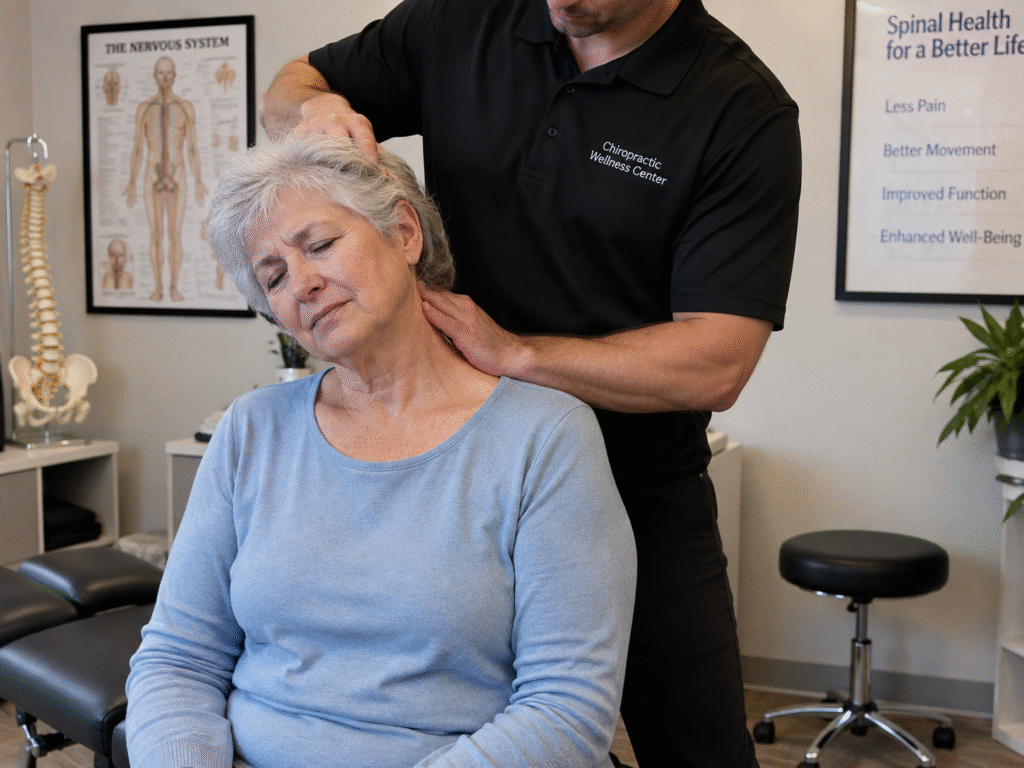
For the specific situations where cervical spine dysfunction is contributing to ear symptoms, and where an ENT workup has cleared actual ear pathology, targeted conservative care can sometimes help. The realistic version of what this looks like:
A careful evaluation focused on upper cervical function. Not just “neck adjustments,” but assessment of joint mobility at the atlanto-occipital and atlantoaxial joints (the top two segments of the neck), suboccipital muscle tension, thoracic spine mobility, and how movement patterns are loading these areas.
Gentle mobilization or adjustment of the upper cervical spine when specific dysfunction is identified. Not aggressive high-velocity manipulation as a first approach. The upper cervical region is anatomically sensitive and warrants a careful hand.
Soft tissue work on the suboccipital muscles and the deep cervical stabilizers. Myofascial therapy targeting the specific muscles that convergently signal to the trigeminocervical nucleus. This alone sometimes produces meaningful improvement when done consistently over several sessions.
Address contributing factors. Posture, desk setup, sleep positioning, and stress patterns all feed into cervical spine loading. Ignoring these while doing hands-on work usually produces temporary relief rather than durable change.
Realistic expectations. Cervicogenic ear symptoms that have been present for months typically respond gradually, over 4 to 8 weeks of consistent care. Complete resolution isn’t always the outcome; meaningful reduction in symptom intensity and frequency often is. A defined trial of care (4 to 6 visits over 4 to 6 weeks) followed by honest reassessment is the reasonable framework. If nothing has changed by then, the neck was probably not the driver and continuing conservative care isn’t the right path.
If This Sounds Like What You’re Dealing With
The specific pattern this article describes (ENT workup that came back normal, ongoing ear symptoms, associated neck or upper back complaints) is one where a proper conservative care evaluation may be worthwhile. Not as a cure for ear symptoms in general. As a possible answer for the specific pattern where cervical spine dysfunction is contributing to what feels like an ear problem.
Cedar Park Chiropractic Relief evaluates patients in this situation carefully. Dr. Alex Klein does a proper upper cervical and postural assessment, gives an honest read on whether cervical involvement is likely contributing to your symptoms, and won’t oversell what conservative care can do for ear problems that aren’t cervical in origin. If the pattern fits, treatment can proceed. If it doesn’t fit, you’ll get a clear referral back to appropriate medical care. Call (512) 501-6941 or book online.
One prerequisite: this evaluation is intended for patients who have already had an ENT workup, not as a first stop for new ear symptoms. If you haven’t yet been evaluated by an ENT, that’s the appropriate starting point regardless of whether cervical involvement turns out to be relevant.
Frequently Asked Questions
Can a chiropractor drain fluid from my ears?
No. Chiropractic care cannot drain middle ear fluid. Claims that chiropractic adjustments can drain fluid from the ears (particularly in children) are not supported by evidence. If your ENT has identified fluid behind the eardrum, medical management is the appropriate path, not chiropractic.
Can chiropractic care cure tinnitus?
No. Most tinnitus has causes that chiropractic care cannot address. A specific subtype called cervicogenic somatosensory tinnitus, where cervical input contributes to the perceived sound, may improve with conservative care targeting the cervical spine. This is a subset of all tinnitus cases, not the majority. If your tinnitus changes with neck movement or is accompanied by neck complaints, cervical involvement is possible. If it doesn’t respond to any positional change, cervical care is unlikely to help.
Should I see a chiropractor for my child’s ear infections?
No. Pediatric ear infections need medical evaluation and appropriate treatment, which may include antibiotics or tube placement for persistent cases. Chiropractic care is not a substitute for medical management of ear infections. Any chiropractor recommending adjustments as an alternative to appropriate medical care for a child with ear infections is offering something outside the scope of what evidence supports.
How do I know if my ear symptoms are cervicogenic?
The typical pattern: an ENT workup that came back normal, ear symptoms that persist despite that clearance, accompanying neck pain or stiffness, symptoms that change with neck position or worsen after prolonged desk work or looking down, and often TMJ or jaw involvement alongside the ear symptoms. A proper evaluation from a chiropractor or physical therapist trained in this area can help sort out whether the cervical component is likely relevant to your specific case.
Do I need to see an ENT before seeing a chiropractor for ear symptoms?
Yes. Ear symptoms need an ENT workup first to rule out ear pathology that requires medical management. Only after that clearance does it make sense to explore whether cervical involvement is contributing. This isn’t a formality. Some ear conditions that need medical care can present similarly to cervicogenic patterns, and skipping the ENT step risks missing something important.
What if my symptoms are cervicogenic AND I have an ear condition?
Both can be true. A cervicogenic component can layer on top of a treated or well-managed ear condition, contributing residual symptoms that don’t respond to the ear-focused treatment. In these cases, appropriate care includes both continuing your ENT-guided management and separately addressing the cervical contribution. The two providers should ideally communicate about your care.