

When Usain Bolt was setting world records, his team traveled with a chiropractor. When Michael Phelps was winning gold medals for Team USA, a chiropractor was on the pool deck. And when your local NFL team takes the field on Sunday, there’s roughly a 1-in-3 chance they have a chiropractor officially on staff. Athletes at the highest level of sport do not make those choices casually. The question for the rest of us is whether the same care that keeps elite athletes performing, can do meaningful work for a weekend runner, a high school volleyball player, or a middle-aged CrossFit regular in Cedar Park.
The short answer is yes, but not for the reasons most chiropractic marketing implies. This guide walks through what sports chiropractors actually do, what the research honestly shows about performance and recovery, who benefits most, and how to pick the right provider.
Do Athletes Go to Chiropractors? The Evidence is Clearer Than You’d Think
Start with the facts that are publicly documented, not the recycled social media claims.
Team USA has had chiropractors embedded with its Olympic program since 1980. Brian Campbell served as USA Swimming’s massage therapist and chiropractor for the 2004, 2008, and 2012 Summer Games, working with Michael Phelps throughout the peak of his career. When Campbell passed away in 2025, Phelps publicly paid tribute to him. That is not an endorsement. It is a 20-year working relationship between the most decorated Olympian in history and a chiropractor.
Dr. Michael Douglas has been the Jamaican Olympic Team’s official chiropractor since 1996, and Usain Bolt, who dealt with scoliosis from a young age, built chiropractic care into his training throughout his career. Video evidence from the 2012 London Olympics shows Bolt receiving treatment between events.
Beyond the Olympics, 31 percent of NFL teams employ chiropractors as an official part of their medical staff, and roughly 29 percent of intercollegiate athletes use chiropractic treatment. Tom Brady has credited regular chiropractic care with extending his career, and a long list of pro athletes across the NBA, NHL, MLB, and PGA have done the same.
The pattern is hard to ignore. Athletes whose paychecks depend on their bodies performing at the absolute edge of human capability keep choosing to include chiropractic care in their program. They are not doing it on a hunch.
What a Sports Chiropractor Actually Does
A sports medicine chiropractor is not just a back-cracker working on athletes. The scope is broader and the methods overlap with physical therapy and athletic training in ways that surprise most first-time patients.
Diagnostic work comes first
Before any adjustment happens, a sports chiropractor is assessing where the body is moving well, where it is not, and which restrictions are limiting performance or creating injury risk. That means checking the hips if the knee hurts, the thoracic spine if the shoulder is stuck, and the ankle if the low back is tight. The kinetic chain matters more than the spot that hurts.
Adjustments target specific restrictions
A chiropractic adjustment is a precise, fast-impulse movement applied to a joint that is not moving well. For an athlete, the goal is usually to restore a specific range of motion the sport demands: thoracic rotation for a pitcher, ankle dorsiflexion for a sprinter, hip extension for a cyclist. One adjustment in the right spot can unlock movement that no amount of stretching has touched.
Soft tissue work and myofascial therapy
The muscles, fascia, and connective tissue around an injured or restricted area usually need direct work, not just joint manipulation. Myofascial therapy is often paired with adjustments because tissue tension and joint restriction reinforce each other, and treating only one half tends to leave the problem half-solved.
Rehab and corrective exercise
This is where good sports chiropractors separate from the pack. Any adjustment that is not reinforced by movement work is a temporary fix. Targeted rehab exercise locks in the gains, strengthens the supporting musculature, and teaches the nervous system to access the restored range of motion under load.
Return-to-sport progression
For athletes coming back from injury, a sports chiropractor should be able to map out what loads are safe at each stage of healing, not just tell them to rest until it feels better. Rest alone rarely produces a full return.
What the Research Actually Shows About Chiropractic and Performance
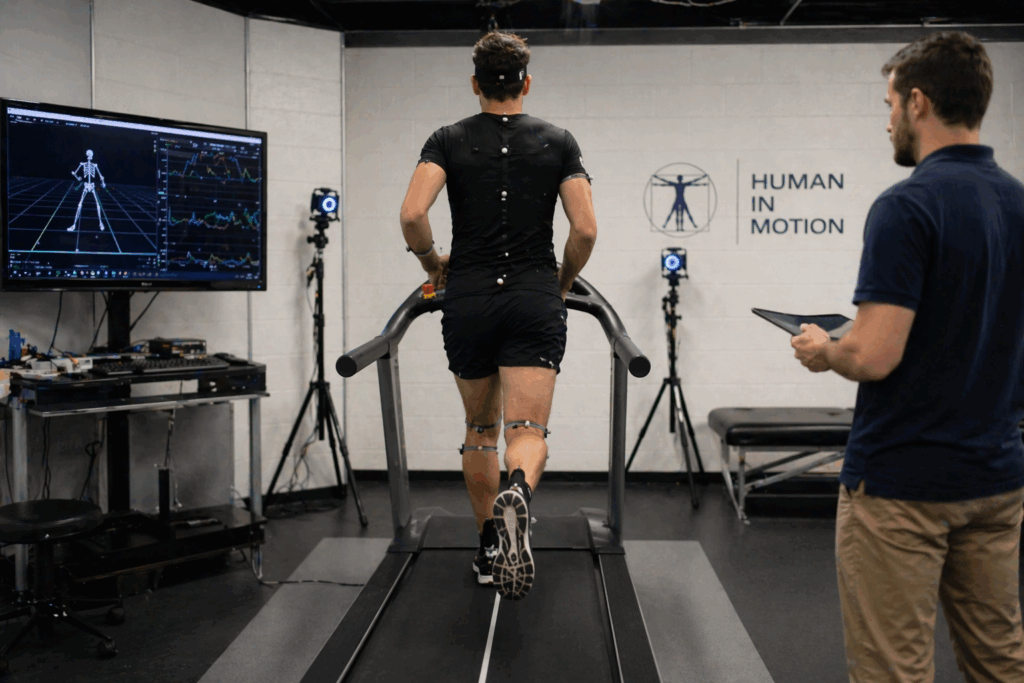
This is where honest care separates from hype. The research on chiropractic and athletic performance is promising but mixed, and any provider telling you that adjustments alone will drop your 100-meter time is overselling.
Here is what the best available evidence actually supports. A 2019 systematic review published in Chiropractic and Manual Therapies looked at spinal manipulation and performance-related outcomes in healthy asymptomatic adults. The finding, in plain English: 84 percent of Royal College of Chiropractic Sports Sciences fellows reported witnessing performance enhancement in asymptomatic athletes immediately after manipulation, but the quality of the research studies varies and more rigorous trials are needed.
Some specific findings with stronger support: spinal manipulation has been shown in lab settings to transiently increase lower-limb strength and corticospinal drive in healthy adults. Golf swing studies have shown that combining stretching with spinal manipulation produced significantly better distance gains than stretching alone. Ankle injury rehab studies have shown faster return to play with manipulation included in the plan.
Where the evidence is weaker: the claim that adjustments alone produce dramatic, permanent performance gains. They don’t, and any chiropractor pitching that is selling something beyond what the research supports. The more honest framing is that chiropractic care removes mechanical obstacles that limit performance, and what athletes do with that restored capacity, through training, rehab, and conditioning, is what converts it into results.
Benefits of Chiropractic Care for Athletes (Beyond the Hype)
Cut through the generic lists of benefits on most chiropractic sites and here is what actually matters for athletes, based on what we see in the clinic and what the research supports.
Restored and maintained range of motion
Sports demand specific ranges of motion, and training often builds capacity in ways that also create restrictions. A baseball pitcher needs thoracic rotation. A runner needs hip extension. A swimmer needs shoulder internal rotation. When those ranges get limited by overuse or asymmetric training, performance drops and injury risk climbs. Adjustments paired with mobility work address the mechanical piece directly.
Faster recovery between sessions
Not because adjustments magically heal tissue, but because addressing joint restrictions and soft tissue tension reduces the compensations that slow recovery. An athlete who can breathe fully, move through normal ranges, and sleep without guarding gets more out of every recovery hour.
Injury prevention through movement screening
A good sports chiropractor identifies the asymmetries and compensations that predict injury before the injury happens. A weak glute on one side, a stiff mid-back, a restricted ankle that is changing how you land: these are the kinds of findings that get addressed in preseason but too often only get attention after something tears.
Drug-free pain management
For the minor aches and strains that come with training, conservative care is a first-line option that keeps you out of the NSAID habit or worse. NSAIDs used regularly can actually slow tissue healing and create GI and cardiovascular risk, which matters a lot when you are training hard year-round.
Better return from injury
When an injury does happen, combining adjustments, soft tissue work, and progressive loading produces faster and more complete recoveries than rest alone. This is what sports injury rehab looks like in practice, and it is where a good chiropractor earns their keep for an athlete.
Which Athletes Benefit Most From Chiropractic Care?

Honestly, most of them, though the specific case varies. Here is how it breaks down across common profiles.
High-impact, high-contact athletes
Football players, rugby players, MMA fighters, hockey players. The case is about recovery from the pounding the sport creates, managing soft tissue trauma, and keeping the spine moving well through a long season. This is why NFL teams employ chiropractors officially.
Rotational sport athletes
Baseball pitchers, golfers, tennis players, and throwers. The case here is thoracic spine mobility, shoulder and hip coordination, and protecting against the asymmetric loading these sports create over years of training.
Endurance athletes
Runners, cyclists, triathletes. The case is about maintaining efficient movement patterns through high training volume, managing the overuse patterns that add up over thousands of repetitive motions, and keeping the pelvis and hips working together.
Strength and power athletes
Weightlifters, CrossFit athletes, sprinters. The case is mobility for positions the sport demands, recovery from heavy loading, and protecting the spine while still training hard.
Youth and high school athletes
This one often gets overlooked and probably shouldn’t. Young athletes are still developing, their training often has significant asymmetries, and small movement issues caught early can prevent much bigger problems down the line.
Weekend warriors and recreational athletes
This is the largest group and arguably the one that benefits most relative to what they’re putting in. Someone training hard on top of a desk job is stacking athletic demands on top of a body that spends 40-plus hours a week in a compromised position. Chiropractic care helps manage both sides of that equation.
What to Expect From a Sports Chiropractor Visit
If you have never worked with a sports chiropractor, here is what a quality first visit looks like.
A good intake goes beyond where it hurts. Your provider will want to know what you are trying to accomplish, because a pitcher prepping for the season, a runner with a nagging hamstring issue, and a lifter chasing a squat PR all need different assessments and different care plans. From there, expect to actually get up and move. A real sports chiropractor watches you move through the positions your sport demands rather than relying on a static table exam, and that distinction alone tells you a lot about who you are working with.
The hands-on portion covers joint mobility, soft tissue tone, and any orthopedic or neurological findings that might shift the plan. Treatment typically combines adjustments and soft tissue work with some immediate corrective movement to reinforce the changes, and you should feel a difference before you leave, not necessarily pain-free, but measurably more mobile or moving more cleanly.
Do not leave without homework. Exercises and mobility work between visits are what make adjustments stick, and a provider who sends you out empty-handed is doing half a job. Your overall plan will usually run more intensive up front, once or twice a week while the main issue is being addressed, then taper to a maintenance frequency that fits your training load and competition schedule.
How to Pick the Right Sports Chiropractor
Not every chiropractor is set up to treat athletes effectively, and the marketing alone doesn’t sort them out. A few practical filters:
- Ask about rehab and exercise. If the answer is vague or the visit doesn’t include any, they’re not really doing sports care. Move on.
- Ask about return-to-sport experience. A sports chiropractor should be able to describe how they progress an athlete from injured back to competing.
- Check the exam. If the first visit is just x-rays and a quick adjustment, that’s not sports medicine. It should include real movement assessment.
- Look for a multi-tool approach. Adjustments alone rarely solve athletic issues. Good providers combine them with soft tissue work, corrective exercise, and load management.
- Be wary of long, pre-sold plans. A 40-visit package sold on day one is a red flag. Real care is iterative and adjusts based on how you respond.
- Ask about coordination. Does the provider work with your coach, PT, or primary doctor when it matters? Lone-wolf providers who don’t coordinate usually underperform.
Train Hard, Recover Smart

Chiropractic care won’t make you an Olympian. What it can do, when paired with intelligent training, is help your body do more of what it’s capable of with fewer interruptions along the way. That’s the honest version of what Bolt, Phelps, Brady, and every NFL team with a chiropractor on staff have figured out. Not magic. Just one more tool in a serious recovery program.
We have been treating athletes of all levels in Cedar Park for years, from high school kids to masters-level competitors to folks just trying to keep up with their training through the years. If you’re an athlete dealing with a nagging injury, a performance plateau, or just want to get ahead of the wear and tear before it becomes something worse, book an evaluation. Call (512) 501-6941 or schedule online.
Frequently Asked Questions
Do athletes really go to chiropractors?
Yes, widely. Team USA has had chiropractors at the Olympic Games since 1980. Thirty-one percent of NFL teams have a chiropractor officially on staff. The Jamaican Olympic team has employed the same chiropractor since 1996. Usain Bolt, Michael Phelps, Tom Brady, Tiger Woods, and many others have built chiropractic care into their programs.
What are the benefits of chiropractic care for athletes?
The strongest benefits are restored range of motion, faster recovery between sessions, injury prevention through movement assessment, drug-free pain management for minor issues, and more complete return from injury when it does happen. Direct performance enhancement from adjustments alone is the weakest claim and the one most often oversold.
How often should an athlete see a sports chiropractor?
It depends on training load and whether there’s a current issue to address. Most athletes do well with more frequent visits while working through a specific problem (once or twice a week for a few weeks), then drop to a maintenance cadence of once or twice a month during heavy training, adjusting around competitions.
Is a sports chiropractor different from a regular chiropractor?
In practice, yes. A sports chiropractor incorporates movement assessment, rehab exercise, return-to-sport progression, and often works with athletes across multiple sports. A general chiropractor may focus mostly on pain relief through adjustments. Both can be useful, but athletes usually benefit more from the sports-specific approach.
Can chiropractic care help youth athletes?
Yes, with gentle techniques appropriate for a growing body. Young athletes often have movement asymmetries from training patterns, and catching them early can prevent the kind of long-term issues that show up in high school and college. Dr. Klein treats athletes across all age groups.
Will my insurance cover a sports chiropractor?
Many insurance plans cover chiropractic care, though coverage varies on visit limits and whether referrals are required. For performance work that is not tied to a specific injury, insurance is less likely to cover it. Our office can verify your specific coverage before your first visit.
How long before an event should I see a chiropractor?
If you’re new to chiropractic care, start at least a few weeks before a major event so your body can adapt to the changes. For athletes already in a regular care routine, timing pre-event adjustments is something your provider should map out with you based on how you respond to treatment.