
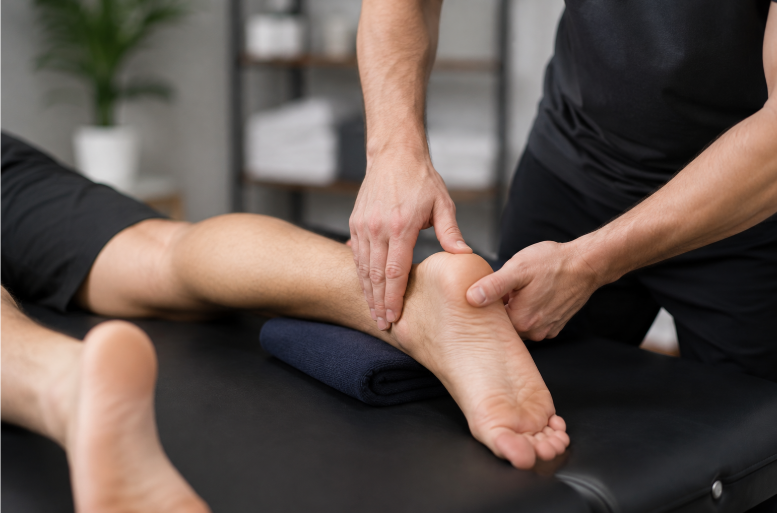
If you’ve been typing “foot adjustment near me” into your phone at 6 a.m. because the first steps out of bed feel like stepping on a rock, you’re in good company. Foot and heel pain is one of the most common reasons people in Cedar Park and Leander start looking for hands-on care.
It’s also an area where the marketing tends to run ahead of the evidence. Some foot problems respond well to joint work. Some respond to load management and better shoes. A few shouldn’t be adjusted at all, and knowing which one you’re dealing with makes the difference between three weeks of progress and three months of spinning your wheels.
What a Foot Adjustment Actually Does
A foot adjustment is a manual technique applied to a specific joint in the foot or ankle to restore motion that’s gone missing. That’s the whole claim. It isn’t a realignment of your skeleton, and nobody is putting your bones back where they belong. It works on the same basic principle as any other joint in the body, which we get into in more detail in how chiropractic adjustments work.
Your foot has 26 bones and more than 30 joints, most of them moving just a few millimeters at a time. Those small motions are how your foot absorbs impact and then stiffens back up to push off the ground. When one joint stops doing its share, the joints and tissue around it start picking up the slack. That usually shows up in the ankle itself, the joint just below it, the middle of your foot, or your big toe.
A typical visit isn’t just a quick thrust and you’re out the door. It starts with checking how each joint moves compared to the other side, then loosening up whatever’s stuck, soft tissue work on the calf and arch, and a few exercises to take home, since motion you don’t keep using tends to disappear again.
Where It Helps, and Where It Doesn’t
Whether an adjustment is useful has less to do with your diagnosis and more to do with whether stiffness is actually part of the problem. Foot and ankle issues are just one of several conditions that respond well to chiropractic care, and the same logic applies here as anywhere else in the body.
When hands-on work earns its place
- An ankle that’s stayed stiff for months after a sprain, long after the swelling went down
- Stiffness in the middle or front of your foot, common after years in stiff work boots or flats, or in runners logging high mileage on hard surfaces
- Plantar fasciitis paired with an ankle that won’t bend upward very far, since that puts extra strain on the arch with every step
- A big toe that won’t bend back properly, so you end up rolling off the inside of your foot instead of pushing off through your toes
- Foot pain that’s actually coming from your hip or knee, where the foot is just where it shows up
When it’s the wrong tool
- Flat feet as a shape. Manual work can ease pain and improve motion, but no adjustment builds an arch.
- Bunions and hammertoes. These are changes in the bone itself that hands-on work doesn’t reverse.
- Nerve-related burning or numbness. That’s a medical issue, not a joint issue.
- Feet with reduced feeling or poor circulation. The risk changes here, and this needs a physician involved.
Anyone telling you an adjustment fixes every foot problem is overselling it. The real question is narrower: is a joint in your foot moving less than it should, and is that actually driving your pain?
Plantar Fasciitis: What Actually Works
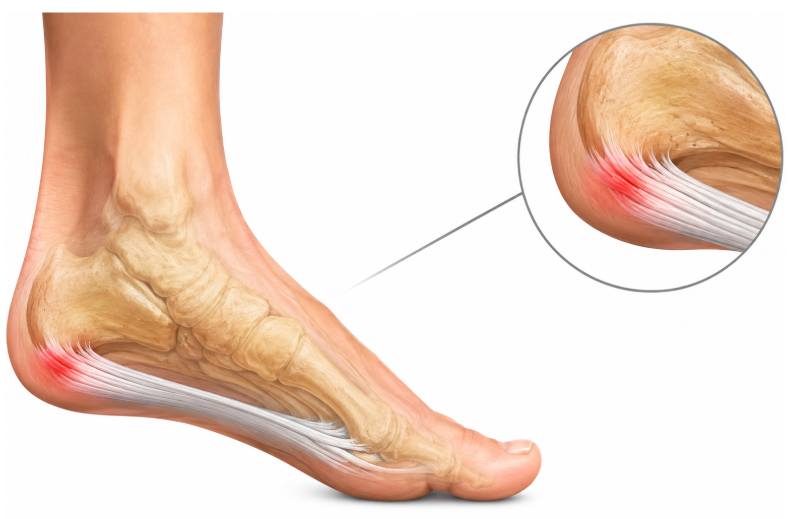
Plantar fasciitis is the most common cause of heel pain, and it’s usually where people searching for a foot adjustment near me start. The plantar fascia is a thick band of tissue running from your heel to the ball of your foot, and pain shows up when it’s overloaded or overstretched. Around 1 in 10 people deal with plantar fasciitis at some point, and healing typically takes a few weeks to a few months.
The classic pattern is sharp heel pain in the first steps of the morning, easing after a few minutes of walking, then coming back after sitting or later in a long day on your feet. If your pain never spikes first thing in the morning and only builds gradually over the day, plantar fasciitis is less likely and something else is worth ruling out.
More than 90% of patients improve within 10 months of simple treatment, and stretching the calf and the bottom of your foot is the single most effective piece of that. That’s the foundation, and it’s not glamorous.
Where does hands-on treatment fit in? Research on manual therapy for plantar fasciitis has found favorable results in one study, alongside a recommendation to start with low-cost basics like stretching, over-the-counter shoe inserts, and understanding what’s actually causing the pain. One favorable study isn’t a mountain of evidence. It supports adding joint and soft tissue work to a plan built around stretching and easing off aggravating activities, not replacing that plan.
In practice, that means joint work where the ankle or midfoot is stuck, soft tissue work for the calf and foot, and a home program of stretching and progressive strengthening. Expect some change within two to three weeks, and plan on working at it for two to three months total. Anyone promising a two-visit fix isn’t being straight with you.
Flat Feet and What Shoe Inserts Are Really For
Flat feet are common, and most of the time they don’t hurt at all. A flatfoot simply means your arch flattens out when you put weight on it. This can be flexible or rigid, and ranges from something a doctor just notices on an exam to something that genuinely limits what you can do. Flat feet alone aren’t a diagnosis. Flat feet plus pain, fatigue, or a change in how you walk is.
Flexible versus rigid
If an arch appears when you rise up on your toes or lift your foot off the ground, your flatfoot is flexible, and flexible feet generally respond well to strength and load work. A rigid flatfoot, where no arch shows up no matter what, needs an orthopedic opinion instead.
Lifelong versus new
Feet that have always been flat and never caused trouble usually don’t need any intervention. An arch that’s flattened over the past year or two, especially with pain along the inside of the ankle, can point to a tendon problem supporting the arch. That’s worth getting looked at properly rather than assuming it’s just how your feet are now.
On shoe inserts, our take is intentionally unglamorous. They manage how much load your foot takes on, they’re not a cure, and not something you wear forever. They’re worth trying when your symptoms track with time on your feet, when you’re on hard surfaces all day, or when strength work alone isn’t holding the improvement. When inserts make sense, we fit them properly through custom orthotics. If what you actually need is stronger feet rather than more arch support, we’ll tell you that instead.
Ankle Sprains: The Part Most People Skip
If you’ve rolled an ankle on a Brushy Creek trail or landed wrong on a rec league court, this section matters. Ankle sprains happen at every age and activity level and are the leading reason people miss out on sports. A previous sprain is itself a risk factor for another one, along with poor balance and shoes that don’t support the foot well.
That recurrence risk is really the whole point here. Most people manage the first few days fine, then stop caring for the ankle as soon as the pain fades, which is exactly when the important work is supposed to start. The ligament heals on its own. Balance, ankle motion, and calf strength don’t come back automatically just because the pain is gone.
A reasonable recovery sequence
In the first few days, protect the ankle and move within a comfortable range, using ice or heat at the right times to keep swelling under control. Over the first one to two weeks, focus shifts to restoring ankle motion, where loosening up a stiff joint genuinely helps. From two to six weeks, balance work and single-leg exercises come first, followed by rebuilding calf strength through its full range, which lowers your odds of spraining it again and is exactly what rehab exercise programming is built for. From six weeks on, you’re gradually working back up to cutting, jumping, and whatever your sport demands.
Research comparing manual therapy plus rehab against rehab alone in people with repeat ankle sprains found short-term improvements in pain and stiffness, but no real difference in long-term function between the two groups. That’s a fair summary of where hands-on treatment sits: a useful addition to rehab, not a substitute for it. Athletes working back to competition need that same progression built into their training, which is a big part of what chiropractic care for athletes looks like for a sport-specific return.
If you can’t put weight on the ankle at all, if there’s bone tenderness right over the bump on either side, or the foot looks visibly out of shape, get an X-ray before anyone touches it.
When You Need a Doctor Instead of Us
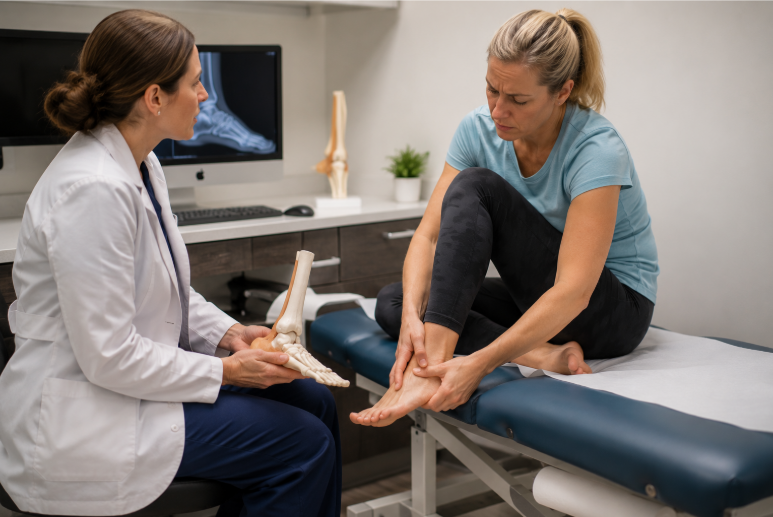
This is the part most clinic websites leave out, so here it is plainly. Get medical evaluation instead of starting hands-on care if any of this fits:
- A possible stress fracture, a tiny crack in the bone from overuse. Pinpoint bone pain that built up over weeks of increased running or walking, tender in one small spot, painful when you hop on it. Avoiding high-impact activity for a while is key to healing, and going back too soon raises the risk of a full break.
- Diabetes, or any loss of feeling in the foot. Diabetes can damage nerves enough that a pebble in your sock can turn into an infected sore without you noticing, and it can also reduce blood flow to the area. Diabetic feet need daily checks and a physician involved.
- Burning, numbness, or pins and needles. That points to a nerve problem, whether from your low back, a pinched nerve near the ankle, or something else, and needs to be sorted out before treatment.
- A joint that’s suddenly hot, red, swollen, and intensely painful, especially the big toe. That can mean gout or infection.
- Fever along with foot swelling, a wound that won’t heal, or spreading redness. Urgent medical care.
- Foot pain after a fall or twist where you can’t put weight on it. Get imaging first.
We refer out for all of these, and we’d rather do it on your first visit than three weeks into a plan that was never going to work anyway.
Why Cedar Park Feet Take a Beating
Central Texas heat puts people in sandals and flip-flops for most of the year, and unsupportive shoes combined with long days on your feet is a reliable recipe for arch and heel pain by August. Plenty of local jobs, from trades to teaching to nursing at the hospitals along 183, mean eight or more hours standing on concrete.
There’s also the weekend jump. People who sit all week at a desk job in the Austin corridor go out Saturday and put in eight miles on the Brushy Creek trail or three hours of pickleball. Your feet adapt slowly, and big swings in activity from one week to the next are usually where plantar fasciitis, stress fractures, and sprains come from. If your pain started within a few weeks of a training jump, a new job on your feet, or new shoes, that history tells us more than any scan will.
What to Expect When You Come In
Foot pain is frustrating because you can’t just rest a foot the way you’d rest a shoulder. You have to stand on it tomorrow, which is why guessing for three months gets expensive fast.
Dr. Alex Klein at Cedar Park Chiropractic Relief looks at the whole picture before recommending anything, whether you’re coming from Cedar Park, Leander, or north Austin. Your first visit includes a history of how the pain started, a hands-on check of how your ankle, midfoot, and toes move, a look at calf strength and balance, and a check of how you actually walk. You’ll get an honest answer about whether conservative care is a good bet, or whether you should see a podiatrist or physician first. If we can help, you’ll leave with a plan and a way to tell if it’s working.
Call (512) 501-6941 or book online.
Frequently Asked Questions:
Is a chiropractic foot adjustment worth it for heel pain?
It can be, when part of your problem is a stiff ankle, midfoot, or big toe combined with a tight calf. Manual therapy works best alongside stretching and load management, not as a standalone fix. If nothing in your foot is actually stiff and your pain comes purely from overuse, footwear changes, strength work, and adjusting your activity will do more good.
Can a chiropractor help with plantar fasciitis?
Often yes, as part of a bigger plan. More than 90% of people improve within 10 months of simple conservative treatment, with calf and foot stretching being the single most effective piece. Chiropractic care adds joint work, soft tissue work, and guided exercise on top of that foundation.
Does a foot adjustment hurt?
Usually not much. Foot and ankle adjustments are small, quick, and use less force than most people expect. You might hear a pop, which is just gas moving inside the joint, not bones shifting. The soft tissue work on a tight calf or irritated arch tends to be the more uncomfortable part, and even that should stay tolerable.
How many visits does foot pain usually take?
For a stiff ankle or midfoot, most people notice a change within two to four visits over two to three weeks. Plantar fasciitis moves slower, usually six to twelve weeks with consistent home exercises, because tissue takes time to build tolerance. If you’re seeing no change after three or four weeks, the plan needs to change or you need to be reassessed. This is the same logic that applies to how often you should see a chiropractor for any condition: visits should taper as you improve, not continue on autopilot.
Can a chiropractor fix flat feet?
No, and nobody can adjust an arch into existence. What can improve is your pain level, your ankle and foot motion, and how well your foot and calf muscles support your arch under load. A flexible flatfoot responds well to strength and load work, and shoe inserts can ease symptoms if you’re on hard surfaces all day. A flat arch that’s new or getting worse, especially with pain on the inside of the ankle, should be looked at properly.
Should I see a chiropractor or a podiatrist for foot pain?
It depends on what’s going on. Pain tied to stiffness, movement, or activity is a reasonable place to start with a chiropractor. A suspected fracture, nail or skin problems, wounds, diabetic feet, a bone deformity that might need surgery, or numbness belongs with a podiatrist or physician instead. A good first visit should tell you which category you’re in.
When should I stop treating foot pain at home and get it checked out?
Get it looked at if heel or foot pain hasn’t improved on its own within a week, or hasn’t improved after two weeks of treatment on your own. Go sooner if you can’t bear weight, you’re feeling numbness or burning, the foot is hot, red, and swollen, you have diabetes, or the pain started after a fall or twist.