
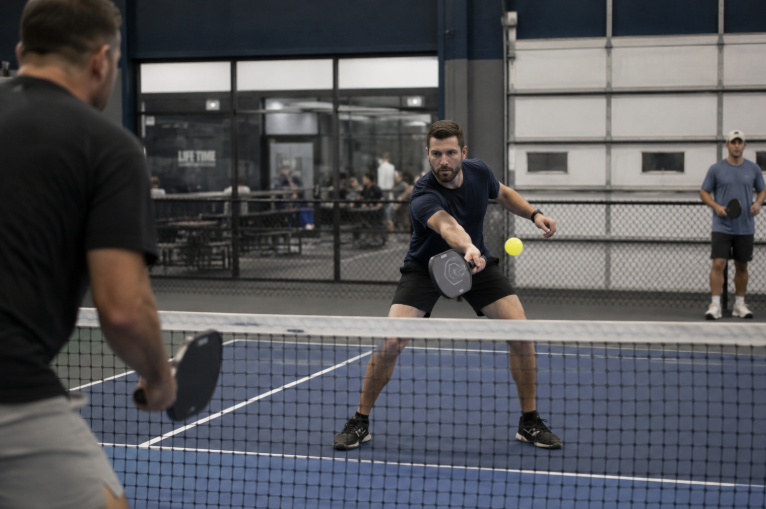
The moment you know something’s actually wrong tends to be small. Not the fall itself. Not the twist. The next morning. Getting out of bed and realizing your ankle doesn’t want to hold you. Reaching for a coffee mug and feeling something catch in your shoulder that wasn’t there yesterday. Standing up from the couch and having your low back seize with a familiar pull that reminds you exactly how the third game ended.
This is the pattern we’re seeing across Cedar Park. New players discovering they love the sport. Established players adding a third or fourth day per week. Retirees who haven’t done anything more athletic than gardening in a decade suddenly playing three matches back-to-back with people 20 years younger. And a steady stream of them walking into the clinic in the following weeks with injuries that seemed to come out of nowhere but were, in retrospect, entirely predictable.
The Paradox of a “Gentle” Sport
Pickleball has a marketing problem. It looks approachable. The court is small. The paddle is light. The ball moves slowly compared to tennis. There’s a lot of laughing on the court, and the game has a reputation as social exercise rather than serious athletics. New players assume they can walk on and play without any preparation, and most of them can, for a while.
The numbers tell a different story. A 10-year analysis of national injury data published in 2025 found that pickleball-related emergency room visits increased significantly year over year, with 87 percent of those visits occurring in players over 50. Falls accounted for about two-thirds of all injuries. Fractures and sprains together made up nearly 60 percent of the total. Emergency department visits nearly doubled from 2020 to 2022. Hospital admissions more than tripled.
The disconnect matters because it shapes how players prepare, or fail to prepare, for the sport. Someone who thinks they’re playing a relaxed social game doesn’t stretch, doesn’t warm up, doesn’t cross-train, doesn’t build up gradually, and doesn’t recognize the early signs of an injury developing until it becomes a problem that stops them from playing entirely.
What’s Actually Getting Hurt, and Where
Different from tennis in some important ways. Tennis players tend to injure their shoulders and elbows from the demands of a single dominant motion. Pickleball players get hurt in a broader mix of places, in part because the game moves so much faster laterally and asks so much more of the lower body than the paddle motion suggests. Here’s where the injuries actually show up.
Ankles and Feet
The number one lower-body injury we see. Pickleball’s short court means players are constantly changing direction, planting hard, and reacting to shots at the kitchen line where balance matters most. Ankle sprains happen when a foot rolls during a lateral movement. Achilles tendon strains and ruptures come from the sudden push-off patterns of the game. Achilles ruptures are common enough that pickleball has become one of the sport-related causes orthopedic surgeons see routinely. Most of these happen not to careless players but to players who suddenly did something explosive without their tissue being ready for it.
Wrists
The single most-injured body part in pickleball. Most wrist injuries come not from the paddle motion but from falls. When a player loses balance chasing a lob or planting to change direction, the instinct is to catch themselves with an outstretched hand. That hand takes the full body’s weight through a small joint that wasn’t designed for it. Wrist fractures dominate the injury statistics, especially in women over 65 whose bone density has typically declined. This is a category where prevention centers less on flexibility and more on managing fall risk and, honestly, on knowing when to let a shot go rather than chase it.
Shoulders
Overhead motions in pickleball are gentler than in tennis, but they add up. Rotator cuff tendinopathy shows up in players who add pickleball to already-strained shoulders from years of desk work or previous sports. Shoulder impingement patterns look similar to what we see in tennis players but usually with lower total load. Sudden shoulder injuries can happen during dives or falls where a player lands on an outstretched arm. The paddle motion itself rarely causes acute injury, but the cumulative volume, especially in players who added pickleball as a third or fourth weekly activity, can push existing shoulder issues into full-blown problems.
Elbows
“Pickleball elbow” is a real thing, and it’s essentially the same condition as tennis elbow (lateral epicondylitis). The repetitive gripping and wrist motion of paddle sports creates microtrauma at the tendons attaching to the outer elbow. Players who grip too tight, use paddles that are wrong for them, or play through early symptoms tend to develop the classic pattern: pain on the outside of the elbow that worsens with gripping, lifting, or twisting motions. Almost never dramatic. Almost always frustrating and slow to resolve.
Knees
The combination of lateral movement, sudden stops, deep bending at the net, and twisting to reach a ball puts real load on the knees. Meniscal tears can happen from a single planted-and-twisted movement. Existing arthritis flares because the sport asks the joint to do things it hasn’t been asked to do in a while. Patellar tendon issues develop in players who’ve suddenly increased volume without preparing the surrounding muscles for the demand. Knees are also where pre-existing conditions tend to become visible fastest. A knee that was quietly stiff during walking often complains loudly during pickleball.
Low back
The rotation, deceleration, and lunging patterns of pickleball load the low back in ways most players don’t anticipate. Muscle strains happen during hard reaches and awkward returns. Disc-related pain shows up in players with pre-existing back issues that they’d managed to keep quiet through their previous activities. Sacroiliac joint irritation is common in players who play multiple days in a row without recovery time. Back pain in pickleball often lingers longer than players expect because they keep aggravating it every time they play.
The Age Factor Nobody Talks About Honestly
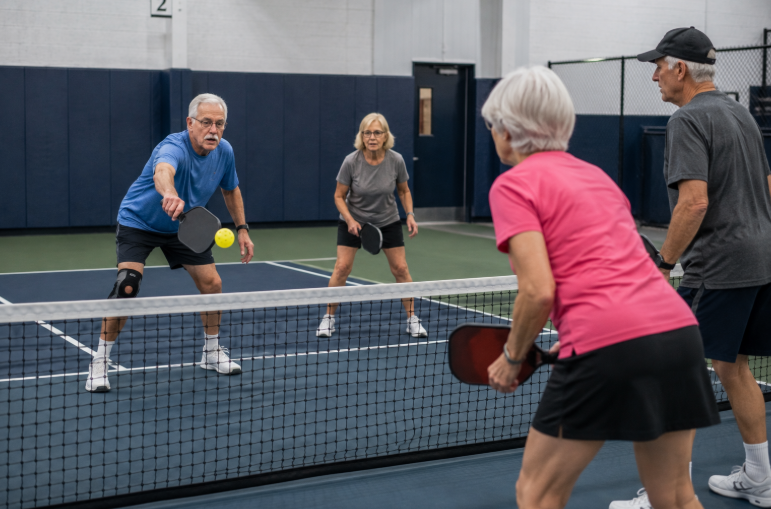
Pickleball’s demographic is famously broad, but the injury data breaks along a clear line. The 87 percent statistic mentioned earlier isn’t an accident. Older bodies handle the specific demands of pickleball differently than younger bodies do, and the sport asks for combinations of qualities (quick reactions, lateral agility, deceleration control, single-leg balance) that most adults over 50 haven’t specifically trained in decades.
None of this means older adults shouldn’t play. The physical, social, and mental health benefits of the sport are real and significant. It means older adults who play need to prepare differently than younger players do. Fall prevention matters more. Building baseline strength before ramping up volume matters more. Recovery between sessions matters more. And the willingness to modify play (skipping certain shots, playing at lower intensity, accepting that not every ball needs to be chased) is often what separates the players who keep enjoying the sport for years from the ones who end up sidelined by an injury they could have avoided.
There’s a specific pattern we see in players 60 and older: they were athletic in their younger years, they can still play at a high level in short bursts, and they don’t respect the difference between what they can do for one point and what they can sustain across four hours of competitive play. That gap is where most of the serious injuries happen.
The Reality of Where and How You Play
The context of pickleball injuries matters too. Court conditions and playing habits shape injury risk in ways that don’t get discussed enough.
Most pickleball courts are hard surfaces. Repurposed tennis courts. Painted asphalt. Concrete with a coating. Compared to a clay or grass tennis surface, these give the joints nothing to work with. Every stop, every plant, every fall transmits full impact through the ankles, knees, and hips. Players coming from tennis backgrounds sometimes underestimate how much harder pickleball’s typical surfaces are on their body.
Shoes matter more than most players realize. Regular tennis shoes are designed for the specific lateral demands of pickleball and provide the traction and support the game requires. Running shoes are the wrong choice, both because they’re built for forward motion and because their aggressive tread patterns can catch on the court surface during lateral movements and produce exactly the kind of fall that leads to a wrist fracture. If you’re playing regularly, court-specific shoes are one of the highest-return purchases you can make.
Playing partners of mismatched skill or age can also contribute to injury. New players tend to hit erratically. Aggressive players tend to drive balls into other people’s kitchens. Players trying to compensate for skill gaps often make lunging, off-balance shots. All of these produce moments where you’re reaching, catching, or falling in ways your body wasn’t ready for. It’s not that these players are dangerous. It’s that mixed-skill environments create more chaotic movement patterns for everyone in them.
7 Habits That Actually Keep You on the Court
Injury prevention for pickleball isn’t complicated, but it does require a different mental model than most players start with. This isn’t about exercise routines or perfect form. It’s about a handful of habits that, done consistently, meaningfully reduce your injury risk.
1. Warm Up Like You Mean It
Not two minutes of stretching. A real 8 to 10 minute warm-up that gets blood flowing, activates your hips and shoulders, and includes some light dinking before you get into competitive play. Cold muscles tearing on the first hard reach is one of the most common injury mechanisms we see. If you skip warm-up in favor of getting a court faster, you’re gambling. Sometimes you win. Sometimes your Achilles doesn’t.
2. Build Volume Gradually
If you’ve been playing twice a week and you decide to play four times this week, your risk goes up. Add sessions the way you’d add mileage to a running program: incrementally, with recovery days built in, and with attention to how your body responds. Doubling your volume in a week is the fastest way to develop overuse injuries that then take months to resolve.
3. Cross-train the Movements Pickleball Demands
Simple lateral agility work. Basic balance exercises. Light strength training for the muscles that stabilize your ankles, knees, and hips. Fifteen to twenty minutes twice a week is enough to make a real difference. The players who cross-train (even lightly) get hurt significantly less than the players who only play pickleball.
4. Wear the Right Shoes
Court shoes designed for pickleball or tennis. Replace them when the tread wears down or the support degrades. Save your running shoes for running. This alone prevents a meaningful percentage of the injuries we see, especially the falls that produce wrist fractures.
5. Learn to Let Shots Go
Not every ball needs to be chased. The moments where players get hurt are almost always moments where they were trying to save a shot they should have let go. This is especially true for players over 60, where the marginal value of winning one point rarely justifies the risk of a fall or a sudden explosive movement your body wasn’t set up for. Good players know when to yield.
6. Rest Between Sessions
Playing three or four days in a row without recovery is where cumulative injuries hide. At least one full day off per week. Two days off between hard sessions when possible. Sleep matters more than most players give it credit for.
7. Address the Small Stuff Early
That twinge in your elbow. The nagging low back after every session. The knee that swells overnight. These are the earliest signs of injuries that get much harder to fix if you ignore them for three months. See someone when the problem is small. Not when you can’t play anymore.
When to Actually See Someone
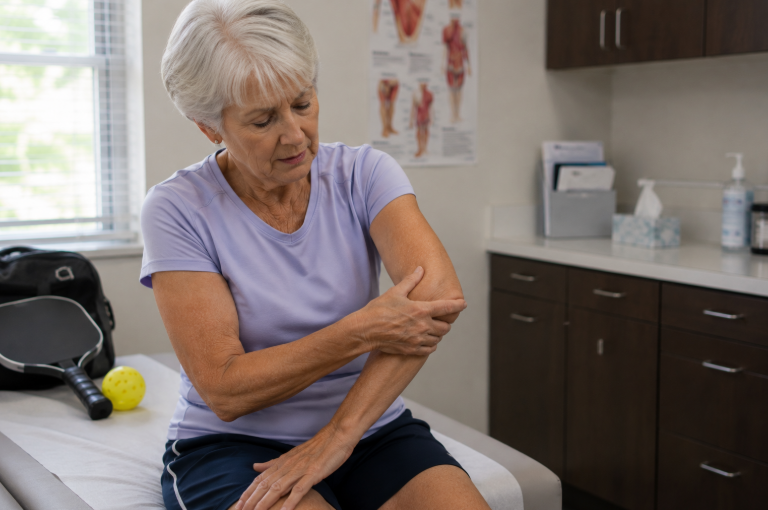
Most pickleball players wait too long. The mental math tends to be: it’s fine, it’ll go away, I’ll rest it, I don’t want to stop playing. Sometimes that’s right. Often it’s how a minor issue becomes a chronic one.
Situations where you should get evaluated:
- Any injury involving a fall on an outstretched hand. Even if it seems fine, wrist and shoulder injuries from falls can hide behind initial swelling and adrenaline. If it hurts more the next day than it did in the moment, get it looked at.
- Sudden significant pain during play, especially anything that felt like a pop, snap, or tear. Achilles ruptures often present exactly this way and get mistaken for a ball hitting the back of the leg. Any suspicion of a tendon rupture is an urgent care visit, not a wait-and-see.
- Pain that lasts more than a week between play sessions. Everyday post-play soreness settles within 24 to 48 hours. Pain that hangs on longer is telling you something structural is happening that won’t resolve on its own.
- Any injury that changes how you move. Limping. Guarding an arm. Bracing a knee. Compensating with your other side. Movement compensations create new problems in new places, and they signal that the original injury needs professional attention.
- Pain that started subtle and is getting worse rather than staying the same. Overuse injuries often have a slow-boil pattern. Ignore them long enough and they progress into problems that require significantly more time to resolve.
If Pickleball Is Working Against Your Body
Most of the pickleball injuries we see in the clinic could have been shorter, milder, or avoided entirely with earlier attention. That’s not a criticism of players. It’s just how sports injuries work: they respond much better to treatment when they’re addressed early. A twinge treated at three weeks is a week or two of care. The same twinge ignored for three months is often three or four months of care.
Dr. Alex Klein at Cedar Park Chiropractic Relief works with pickleball players across the age and skill spectrum, from newer players trying to figure out why their body is protesting to experienced players managing overuse patterns. The first visit is an honest evaluation, a clear read on whether conservative care can help, and (if it can) a plan that fits your goals for staying on the court. If conservative care isn’t the right answer, you’ll get a straight referral. Call (512) 501-6941 or book online.
Common Questions from Pickleball Players
Is pickleball actually more dangerous than it looks?
Yes and no. The individual movements aren’t especially dangerous. The combination of quick lateral motion, sudden stops, overhead reaches, hard court surfaces, and players who haven’t prepared for the physical demands adds up to a real injury rate, especially in players over 50. It’s not about the sport being dangerous. It’s about most players underestimating what it asks of their bodies.
Can I keep playing while I heal?
Sometimes yes, sometimes no. Mild overuse patterns can often be managed alongside modified play (reduced volume, reduced intensity, avoiding aggravating motions). Acute injuries typically require complete rest until they’ve healed enough to begin gentle return to play. The specifics depend on what you’re dealing with, and that’s a conversation to have with a provider who’s actually evaluated your situation.
What should I do about pickleball elbow?
Lateral epicondylitis (pickleball elbow) responds well to conservative care but takes time. Rest from the aggravating motion, ice for symptom management, targeted rehab strengthening the forearm musculature, soft tissue work on the affected tendons, and sometimes bracing during play as you return to it. Full resolution typically takes 6 to 12 weeks. Playing through it without addressing it usually makes it worse and adds months to recovery.
I’m over 60 and just started pickleball. What should I know?
The sport is genuinely good for you at almost any age, but preparation matters more than younger players might realize. Consider getting cleared by your primary care provider before starting. Build up gradually over weeks, not days. Do some baseline strength and balance work between sessions. Wear real court shoes. And practice the mental discipline of letting shots go rather than chasing everything. The players who stay in the sport for years are the ones who play smart, not the ones who play hardest.
Should I see a chiropractor or an orthopedist for a pickleball injury?
Depends on severity. Fractures, suspected tendon ruptures, injuries that involve loss of function or significant swelling, or anything after a hard fall should be evaluated by an urgent care or orthopedist first, sometimes with imaging. Overuse patterns, muscle strains, joint stiffness, and soft tissue issues are reasonable to start with a chiropractor or physical therapist. If you’re not sure which category your injury falls into, an initial evaluation can help you sort it out.
Are pickleball injuries different from tennis injuries?
Some overlap, some real differences. Tennis skews toward shoulder and elbow injuries from the demands of a bigger overhead motion. Pickleball spreads across more body regions, with a much higher rate of ankle, knee, and wrist injuries because of the smaller court, faster lateral movements, and higher rate of falls. Pickleball also skews toward an older demographic, which changes both injury patterns and recovery timelines.
Will pickleball give me arthritis?
Playing pickleball doesn’t cause arthritis. But if you already have joint issues (knees, hips, spine) that are stable, pickleball can worsen them, particularly in the early weeks before your body has adapted to the sport’s demands. This is another reason for gradual volume buildup and honest awareness of pre-existing conditions before starting or intensifying play.